
🐆
Chris Ford — aka CryptoJag
Crypto educator · rchrisford.com
There is one emotion that costs crypto traders more money than any other. More than fear. More than greed. More than impatience. It is FOMO — Fear of Missing Out. And unlike most trading mistakes, FOMO does not just hurt your portfolio once. It creates a repeating cycle of chasing, losing, and chasing again that can destroy months of gains in a single session.

The stock market is a device for transferring money from the impatient to the patient.

— Warren Buffett

What FOMO Actually Is — And Why It Hits So Hard in Crypto

Crypto trader experiencing FOMO watching coins pump on screen

FOMO — Fear of Missing Out — is the psychological response to watching an opportunity pass you by. In crypto, it is triggered by seeing a coin up 40% in a day, watching your social media feed fill up with screenshots of gains, or hearing someone talk about how much money they made on a trade you skipped.

The crypto market is uniquely designed to trigger FOMO at every turn. It runs 24 hours a day. Prices move faster than any other asset class. Social media amplifies every gain and buries every loss. And because crypto is still relatively new, there is always a lingering fear that this might be the move that changes everything — and you are missing it.

68%
of retail crypto traders report making at least one significant FOMO-driven trade in the past 30 days

The result is that most traders spend their time chasing pumps that have already happened, buying tops that are about to become dumps, and paying the price for letting social media make their trading decisions.

The FOMO Cycle — How It Traps You Every Time
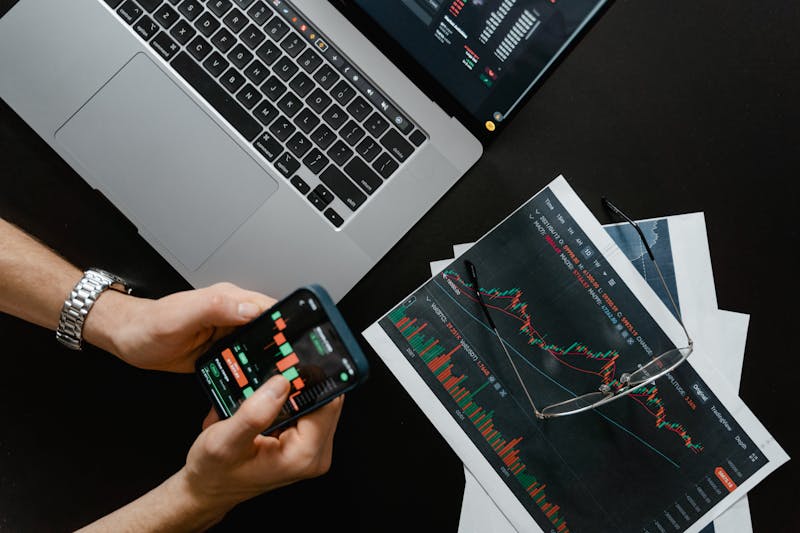
Crypto market pump and dump cycle driven by FOMO traders

FOMO does not just happen once. It operates in a cycle that traps traders repeatedly. Understanding the cycle is the first step to breaking it.

  • Stage 1 — The pump begins — a coin starts moving up. Early buyers enter based on research or a setup. Price rises steadily.
  • Stage 2 — Social media lights up — screenshots of gains start circulating. Influencers call it. The narrative builds. Everyone is talking about it.
  • Stage 3 — FOMO peaks — you have been watching it run for two days. You feel like you are the only person not in the trade. The urgency feels overwhelming. You buy.
  • Stage 4 — The top — you entered at the exact point where the smart money that bought early is now selling to you. You are now the exit liquidity.
  • Stage 5 — The dump — price reverses sharply. You are underwater. The same social media that drove you in is now silent or making excuses.
  • Stage 6 — Repeat — the cycle begins again with the next coin, the next narrative, the next pump.
The brutal truth: By the time a crypto opportunity is being talked about everywhere — on X, in Telegram groups, on YouTube — the best part of the move is almost always already over. FOMO buys at the top. Patient traders buy at the bottom.

The Real Cost of FOMO — By the Numbers
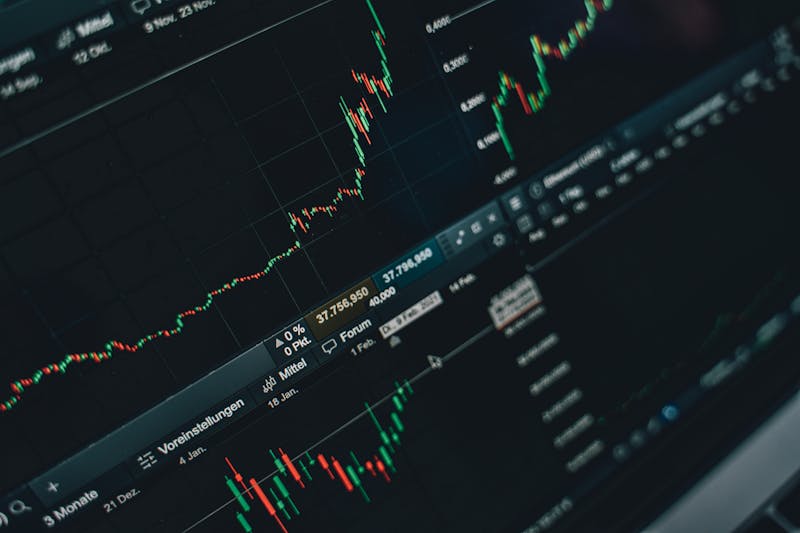
Crypto portfolio showing losses from FOMO trading decisions

FOMO does not just cost you money on a single bad trade. It compounds into a pattern of behavior that systematically destroys portfolio value over time. Here is what the real cost looks like:

  • Entry at the wrong price — FOMO entries are almost always at or near the top of a move, giving you a terrible risk/reward ratio from the start
  • No exit plan — FOMO trades are entered without a stop loss or profit target, leaving you with no plan when the price turns against you
  • Oversized positions — FOMO creates urgency that leads to putting too much capital into a single trade to maximize the gains you feel you are about to miss
  • Transaction costs — chasing pumps often means paying high fees during peak volatility, eating into returns before the trade even starts
  • Opportunity cost — capital tied up in a bad FOMO trade is capital not available for the high-quality setups that come along later
The math is simple: A trader who makes 10 planned trades with a 55% win rate will consistently outperform a trader who makes 20 trades where half are driven by FOMO. Fewer, better trades beat more emotional trades every single time.

5 Proven Strategies to Beat FOMO for Good

Disciplined crypto trader with calm systematic approach beating FOMO

FOMO is not something you can simply decide to stop feeling. It is hardwired into human psychology. But you can build systems that prevent it from translating into bad trades. Here are five that work:

  1. 1
    Remind yourself that there is always another trade The market runs 24 hours a day, 365 days a year. Missing one move does not mean missing crypto. Another opportunity is always coming. This single mindset shift eliminates a huge amount of FOMO pressure.
  2. 2
    Never enter a trade without a written plan FOMO trades are impulsive by definition. If you require a written entry price, exit target, and stop loss before every trade, FOMO trades will eliminate themselves — because you will never be able to write a rational plan for an emotional chase.
  3. 3
    Mute crypto social media during market hours Social media is designed to trigger FOMO. It shows you gains, not losses. It shows you the exception, not the rule. Muting or limiting your exposure to crypto social media during active trading hours removes the trigger at the source.
  4. 4
    Keep a FOMO log in your trading journal Every time you feel the urge to chase a pump, write it down — the coin, the price, the narrative that triggered it. Then check back 48 hours later. You will quickly build a personal record proving that most FOMO impulses would have resulted in losses.
  5. 5
    Use the Fear and Greed Index as your FOMO check When you feel the urge to chase, check the Fear and Greed Index. If it reads Extreme Greed — that urgency you feel is shared by thousands of other emotional retail traders. That is precisely when you should be most cautious, not most aggressive.

FOMO vs Conviction — How to Tell the Difference

Crypto trader distinguishing between FOMO and genuine conviction trades

Not every trade that feels urgent is a FOMO trade. Sometimes a move genuinely catches you by surprise and there is a legitimate opportunity still available. The key is knowing the difference between FOMO and conviction. Here is a simple test:

  • FOMO trade — you first heard about this coin on social media in the last 24 hours. The price is already up significantly. You cannot explain the fundamentals. The urgency comes from fear of missing gains, not from a clear thesis.
  • Conviction trade — you have been watching this asset for days or weeks. You understand why it is moving. You have a clear entry, exit, and stop loss. The opportunity fits your existing trading plan.
  • The test question — ask yourself: “Would I be interested in this trade if the price had not moved yet?” If the honest answer is no — it is FOMO, not conviction.
The bottom line: Conviction trades are planned in advance and executed calmly. FOMO trades are discovered through social media and executed urgently. The former builds wealth over time. The latter transfers it to traders who were already positioned before you heard about it.
Complete Psychology Series
📚 More From the CryptoJag Blog
🤖
Why AI + Crypto Is the Next Big Narrative — And Why Most People Are Early

The convergence of artificial intelligence and cryptocurrency — and how to position yourself before the crowd catches on.

💧
Liquidity and Crypto — Why Markets Move When Money Moves

Understanding liquidity is understanding why prices really move — and most people miss this completely.

💰
The Complete Guide to Passive Income in Crypto 2026 — Beginner to Advanced

Every passive income strategy in crypto explained — from staking and vaults to DeFi yield and beyond.

⚠️
7 Mistakes That Make People Lose Money in Crypto — And How to Avoid Them

The seven most common and costly crypto mistakes — and the exact fixes for each one.

The Ultimate Guide to Hyperliquid DEX — Decentralized Exchange

Everything you need to know about the most powerful DEX in crypto — from setup to your first trade.

🎬
Flagship Video Course
From CryptoJag
DeFi Demystified — 9-Module Video Course

Go from complete beginner to confidently earning passive DeFi income — without getting scammed, stuck, or overwhelmed. 9 video modules covering wallet setup, exchanges, DeFi strategies, scam prevention, and your personal 5-step crypto plan. Includes 6 bonuses and a 30-day money-back guarantee.

Frequently Asked Questions
1 Is FOMO ever justified — can chasing a pump ever be the right call?
Occasionally a move that triggers FOMO is genuinely early in its run and still has significant upside. But here is the honest answer: you cannot tell the difference between a legitimate early entry and a blow-off top when you are in the grip of FOMO. The emotion itself impairs your judgment. The solution is not to decide case by case whether your FOMO is justified — it is to build a system that forces rational analysis before every entry. If the analysis supports the trade, take it. If the only reason you want to enter is because the price is already up significantly, that is FOMO — and no amount of rationalization changes that.
2 How is FOMO different from legitimate momentum trading?
Momentum trading is a legitimate strategy based on identifying assets with strong price momentum and entering with a clear thesis, defined risk, and an exit plan. FOMO trading is impulsive, unplanned, emotionally driven, and usually entered without a stop loss. The key difference is preparation. A momentum trader identifies assets showing strength before they become widely talked about and enters early in the move with a plan. A FOMO trader discovers an asset after it has already moved significantly, driven by social media, and enters without any plan at all. Same chart, completely different psychology and completely different outcomes.
3 What is the single best habit to develop to reduce FOMO long term?
Keep a FOMO log. Every time you feel the urge to chase a pump and you do not take the trade, write it down — the coin, the price, what triggered the feeling, and why you did not enter. Then track what happened to that coin over the next 48 to 72 hours. Do this for 30 days and you will have built a personal evidence base showing exactly how often your FOMO impulses would have resulted in losses. That data is more powerful than any mindset coaching. It makes the cost of FOMO concrete and personal rather than abstract and theoretical — and that changes behavior faster than anything else.
🧠 Crypto Trivia — Test Yourself
3 brainteaser questions — answers revealed below each one
1 Bitcoin has a maximum supply of 21 million coins. As of 2026, approximately how many Bitcoin have already been mined?
A) Around 12 million BTC
B) Around 19.8 million BTC
C) Around 16 million BTC
D) The full 21 million have already been mined
Answer: B — Approximately 19.8 million Bitcoin have been mined, leaving fewer than 1.2 million left to be mined. The last Bitcoin is projected to be mined around the year 2140 due to the halving schedule.

2 What does the term “gas fee” refer to in the context of blockchain transactions?
A) A fee paid to crypto exchanges for listing a new token
B) The cost of electricity used to mine a new block
C) A transaction fee paid to network validators for processing and confirming your transaction on the blockchain
D) A tax applied by governments to crypto transactions
Answer: C — Gas fees are paid to the validators or miners who process and confirm transactions on a blockchain network. They fluctuate based on network congestion — the busier the network, the higher the gas fee.

3 What is a “seed phrase” and why is it considered the most important thing in crypto security?
A) A list of your recent transactions used for tax reporting
B) A 12 or 24-word phrase that acts as the master key to your crypto wallet — anyone who has it can access and drain all your funds
C) A password created by your exchange to protect your account
D) A unique code sent by email every time you log into your wallet
Answer: B — A seed phrase is a 12 or 24-word recovery phrase that gives complete access to a self-custody wallet. It must be written on paper, stored offline, and never shared with anyone. It cannot be reset or recovered if lost — making it the single most important element of crypto security.

Want the Complete Psychology System?

FOMO is one piece of the trading psychology puzzle. The full guide covers fear, greed, revenge trading, emotional control, checklists, routines, and the Fear and Greed Index — the complete system for trading with discipline every single day.

Read the Full Guide: Crypto Trading Psychology →


Chris Ford aka CryptoJag
About the Author
Chris Ford
aka CryptoJag

Crypto educator, DeFi strategist, and founder of VaultFlow. Helping beginners earn passive income with crypto — without the overwhelm. I break down wallets, DeFi, trading psychology, and Hyperliquid vaults into plain English so anyone can follow along and start earning.

Leave a Reply

Your email address will not be published. Required fields are marked *

DeFi Passive Income with Hyperliquid Vaults

Want 50% + APR from Passive Income!

Earn passive income with ‘VaultFlow’! (COMING SOON)

Join the VaultFlow waitlist and be first to access curated vault picks, weekly yield reports, and step-by-step guidance — all for $20/month. 

Founder spots available to 1st 100 only.  Lock in your lifetime $20/month rate upon launch.  First name and best email below.  (FYI – if you use a Gmail account Google may block it.) 

We hate spam.  Your info will never be shared.