

Introduction: The Moment Crypto Crossed the Line



For years, crypto existed as a parallel financial system—volatile, chaotic, and largely driven by retail traders, early adopters, and a handful of large holders. It thrived on narratives, speculation, and rapid liquidity shifts that could send prices soaring or crashing within hours.
Then everything changed.
When BlackRock—the largest asset manager in the world—entered the space through a Bitcoin ETF, it wasn’t just another bullish headline. It marked a structural shift in how capital flows into Bitcoin, how markets behave, and ultimately, who controls price action.
This wasn’t adoption in the traditional sense.
It was integration into the global financial system.
And with that integration came a new reality: crypto is no longer just crypto—it’s now part of Wall Street’s machine.
The Pre-ETF Era: A Retail-Driven Market


Before institutional giants stepped in, the crypto market operated very differently from traditional finance.
Price movements were largely dictated by:
- Retail sentiment
- Social media hype
- Whale accumulation and distribution
- Exchange-driven liquidity cycles
Platforms like Binance and Coinbase served as the primary gateways, but participation was still dominated by individuals rather than institutions.
This created a unique environment:
- Extreme volatility was normal
- Narratives could outweigh fundamentals
- Market cycles were faster and more emotional
Retail traders weren’t just participants—they were the market.
A viral tweet, a trending token, or a sudden surge in attention could move billions in market capitalization. In many ways, crypto was the purest form of a sentiment-driven asset class.
But that came with trade-offs:
- Low liquidity relative to traditional markets
- Susceptibility to manipulation
- Lack of institutional stability
This is exactly what made crypto attractive—and dangerous.
Enter BlackRock: The Institutional Floodgate

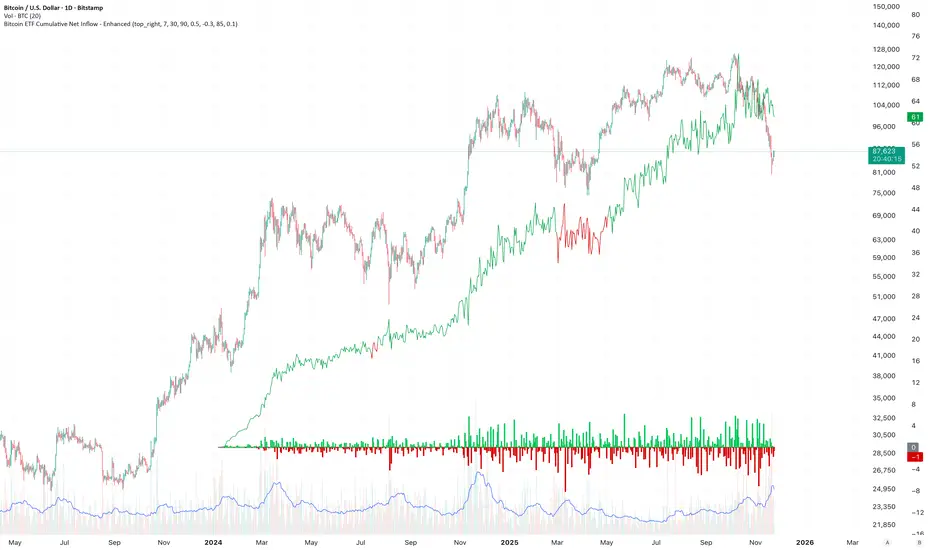
When BlackRock launched its Bitcoin ETF, it effectively removed one of the biggest barriers to entry for institutional capital: complexity.
Previously, large funds faced hurdles such as:
- Custody risks
- Regulatory uncertainty
- Operational friction
With ETFs, exposure to Bitcoin became:
- Simple
- Regulated
- Familiar
Now, pension funds, hedge funds, and asset managers could gain exposure without ever touching a private key or interacting with a crypto exchange.
This unlocked a new kind of capital—slow, massive, and strategic.
Unlike retail traders, institutions:
- Allocate over longer time horizons
- Move capital in large, deliberate chunks
- React to macroeconomic signals rather than social trends
The result? A shift from chaotic flows to structured liquidity.
ETFs and the Transformation of Market Dynamics


The introduction of Bitcoin ETFs didn’t just bring more money into the market—it fundamentally altered how the market behaves.
1. Liquidity Became Deeper—but More Controlled
Institutional capital increased overall liquidity, reducing some of the erratic price swings seen in earlier cycles. However, this liquidity is also more concentrated, meaning fewer entities have greater influence.
2. Volatility Shifted, Not Disappeared
While day-to-day volatility may appear lower, macro-driven moves can now be larger and more sustained. Instead of sudden spikes from retail FOMO, we see trend-driven movements influenced by capital flows.
3. Narratives Lost Some Power
In the past, narratives like “DeFi summer” or “NFT boom” could dominate the market. Today, macro narratives—interest rates, inflation, global liquidity—play a larger role.
4. Timing Became More Complex
Retail traders often rely on momentum and sentiment. Institutions operate on:
- Quarterly allocations
- Risk models
- Economic indicators
This creates a mismatch in timing, where retail may enter too late or exit too early.
Bitcoin: From Speculative Asset to Macro Instrument



One of the most profound changes brought by BlackRock and similar players is the repositioning of Bitcoin itself.
It is no longer viewed purely as:
- A speculative asset
- A tech experiment
- A retail-driven trade
Instead, it is increasingly treated as:
- A store of value
- A hedge against monetary debasement
- A macro asset tied to global liquidity cycles
This shift has several implications:
Correlation With Traditional Markets
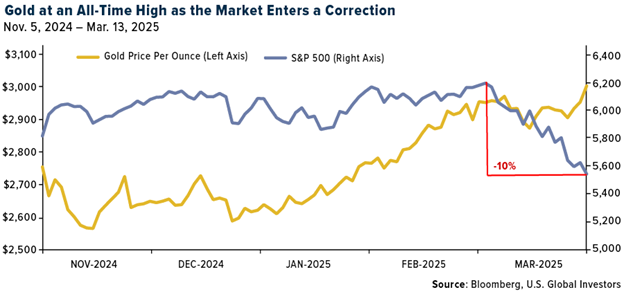
Bitcoin now shows stronger correlations with equities and macro indicators, especially during periods of economic stress.
Institutional Narratives Dominate
Terms like “digital gold” and “portfolio diversification” are now central to how Bitcoin is discussed.
Reduced Ideological Focus
Early crypto narratives centered around decentralization and financial sovereignty. While still relevant, these ideas are now secondary to capital allocation strategies.
The New Power Structure: Who Really Moves the Market?



Perhaps the most important question is also the simplest:
Who controls the market now?
In the past:
- Retail traders drove momentum
- Whales amplified trends
- Exchanges influenced liquidity
Today:
- Asset managers like BlackRock shape inflows
- Institutional portfolios dictate allocation
- Macro conditions influence direction
Retail hasn’t disappeared—but its influence has diminished relative to the scale of institutional capital.
This creates a new hierarchy:
- Institutional capital
- Macro liquidity
- Retail participation
Understanding this hierarchy is essential for anyone navigating today’s crypto market.
Opportunities in the ETF Era


Despite the structural shift, opportunities still exist—arguably better ones for those who adapt.
1. More Stability for Long-Term Investors
With institutional backing, Bitcoin is less likely to face existential threats, making it more attractive for long-term holding.
2. Increased Legitimacy
Institutional participation validates crypto in the eyes of traditional investors, expanding the overall market.
3. Predictable Macro Trends
While still complex, markets influenced by macro factors can be studied and anticipated with the right framework.
4. New Financial Products
ETFs are just the beginning. Expect more structured products, derivatives, and hybrid instruments bridging crypto and traditional finance.
Risks and Trade-Offs


However, this new era is not without risks.
1. Centralization of Influence
As institutions dominate, the market becomes more centralized—ironically contradicting crypto’s original ethos.
2. Reduced Asymmetric Opportunities
Early crypto offered outsized returns due to inefficiencies. Increased efficiency may reduce these opportunities.
3. Macro Dependency
Bitcoin is now more sensitive to:
- Interest rates
- Monetary policy
- Global liquidity
This ties crypto more closely to traditional financial cycles.
4. Narrative Compression
Speculative narratives may have less impact, reducing the explosive upside seen in previous cycles.
Adapting to the New Reality


Success in this new environment requires a shift in mindset.
Think Like an Allocator, Not a Gambler
Instead of chasing short-term gains, consider:
- Portfolio construction
- Risk management
- Time horizons
Follow the Money, Not the Noise
Track:
- ETF inflows and outflows
- Institutional positioning
- Macro indicators
Be Patient
Institutional markets move slower—but when they move, they move with force.
Conclusion: A Different Game, Not the End of the Game


The entry of BlackRock into crypto didn’t mark the end of opportunity—it marked the beginning of a new phase.
The rules have changed:
- The players are bigger
- The flows are deeper
- The narratives are broader
But at its core, the market remains what it has always been: a system driven by capital, psychology, and timing.
The difference now is scale.
If the early era of crypto was defined by innovation and chaos, the ETF era is defined by integration and structure.
And the question every participant must answer is simple:
Will you keep trading the old market… or learn how the new one actually works?