

The idea of a U.S. Bitcoin reserve has shifted from fringe speculation to mainstream macro discussion. Once dismissed as maximalist fantasy, the concept now circulates in policy debates, institutional research, and geopolitical analysis.
At its core, the question isn’t ideological — it’s strategic:
Could the United States ever hold Bitcoin as a sovereign reserve asset?
And if it did, what would that mean for crypto markets, capital flows, and global monetary power?
This article examines the probability, the pathways, and the market consequences of such a move.
What Would a U.S. Bitcoin Reserve Actually Look Like?


Before analyzing impact, we must define structure. A Bitcoin reserve could take several different forms — not all of them equal in significance.
1. Passive Retention of Seized Bitcoin
The U.S. Department of the Treasury already controls confiscated BTC from criminal enforcement cases. Historically, these holdings are auctioned.
If the government simply stopped selling seized Bitcoin and instead retained it, that would technically create a de facto reserve — but not an active accumulation strategy.
Impact: modest supply reduction, symbolic validation.
2. Strategic Treasury Allocation
A more substantial shift would involve Congress authorizing the Treasury to allocate a portion of national reserves into Bitcoin, similar to how gold is held at Fort Knox.
This would represent deliberate sovereign diversification.
Impact: structural demand shock.
3. Federal Reserve Integration
The most radical scenario would involve the Federal Reserve formally adding Bitcoin to its balance sheet alongside Treasuries and gold.
This would transform Bitcoin from speculative asset to monetary instrument.
Impact: paradigm shift in global finance.
These distinctions matter. Most public commentary fails to differentiate between symbolic custody and active monetary adoption.
Why Would the U.S. Even Consider It?


The United States issues the global reserve currency. Why hedge against its own system?
The answer lies in macro stress dynamics.
1. Debt Sustainability
U.S. debt-to-GDP levels continue rising. If confidence in long-term fiscal stability erodes, policymakers may seek diversification mechanisms.
A small Bitcoin allocation could act as a non-sovereign hedge.
2. Geopolitical Competition
If adversarial nations accumulate Bitcoin as a strategic reserve asset, the game theory shifts. Sovereign adoption by competitors could pressure the U.S. to avoid strategic disadvantage.
Monetary systems are not static — they are competitive.
3. Digital Commodity Thesis
Bitcoin increasingly trades like digital gold — scarce, portable, censorship-resistant.
If gold remains a reserve asset, the argument for holding a digitally native counterpart strengthens over time.
4. Institutional Normalization
Spot ETFs from firms such as BlackRock have reduced reputational risk around Bitcoin exposure. Institutional infrastructure now exists.
The asset is no longer operationally inaccessible.
The Political Reality: Is It Plausible?


Despite macro arguments, politics remains the primary constraint.
Bitcoin is volatile. It is ideological. It is controversial.
For a reserve policy to emerge, several conditions would likely need to align:
- Sustained fiscal instability
- Bipartisan acceptance of digital assets
- Regulatory clarity around custody and accounting
- Reduced volatility profile over time
Short-term probability (1–3 years): low.
Medium-term probability (5–10 years): dependent on macro stress.
Long-term probability: materially higher if Bitcoin matures into a stable macro asset.
The reserve thesis strengthens during crisis — not during stability.
Market Impact Scenario Analysis
Now we turn to the central question:
If the U.S. announces a Bitcoin reserve, what happens next?
Scenario 1: Symbolic Retention of Seized Bitcoin
If the government simply stops auctioning seized BTC:
- Removes periodic supply overhang
- Signals mild policy shift
- Limited structural demand
Market effect: moderately bullish, primarily psychological.
Scenario 2: Active Treasury Accumulation
This is where reflexivity begins.
If the Treasury announces incremental purchases:
- Front-running from institutions
- ETF inflow acceleration
- Derivatives leverage expansion
- Supply shock narrative amplification
Bitcoin is reflexive. Price drives narrative. Narrative drives capital.
Under active accumulation:
- BTC dominance likely rises sharply.
- Capital rotates from altcoins into Bitcoin.
- Volatility initially spikes before potentially compressing.
Even a small allocation (e.g., 1% of reserves) could absorb meaningful circulating supply.
Scenario 3: Federal Reserve Balance Sheet Integration
If the Federal Reserve integrates Bitcoin:
- Bitcoin becomes sovereign-grade collateral
- Global central banks reassess reserve composition
- Monetary theory debates intensify
This would likely trigger a global repricing event.
Markets would treat Bitcoin less like a speculative asset and more like a monetary reserve commodity.
Supply Shock Mathematics

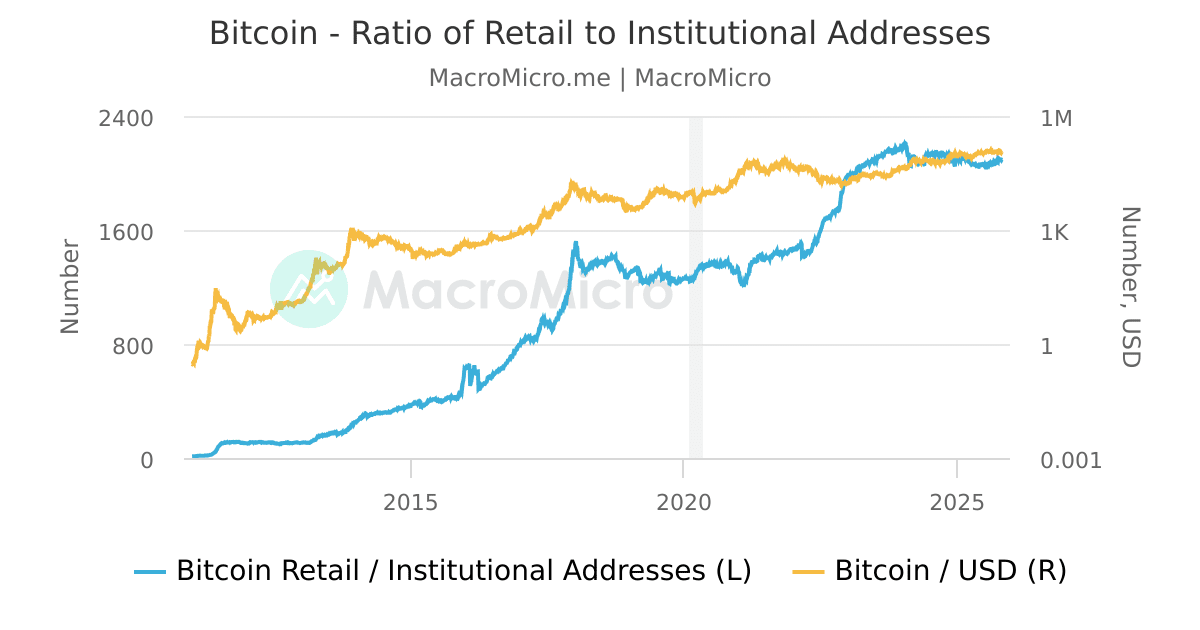
Bitcoin’s defining feature is fixed supply: 21 million coins.
Unlike gold, supply cannot respond to demand.
If the U.S. allocated even $50–100 billion into Bitcoin:
- Circulating liquid supply would tighten rapidly.
- Long-term holders historically do not sell into early rallies.
- ETF flows would compound the demand imbalance.
Bitcoin’s float is smaller than headline market cap suggests.
A sovereign buyer changes equilibrium.
What Happens to Altcoins?
In major Bitcoin-dominance narratives, capital centralizes.
Phase 1:
- Bitcoin outperforms
- ETH underperforms relative to BTC
- Alt/BTC pairs bleed
Phase 2:
- After BTC establishes higher range
- Risk appetite expands
- Altcoin rally follows
The initial reserve announcement would likely be a Bitcoin-specific catalyst, not a broad crypto rally.
Longer term, legitimacy spillover could benefit the entire ecosystem — but timing would matter.
Who Benefits Beyond Bitcoin?
A sovereign reserve policy would not only reprice Bitcoin.
Custody & Infrastructure
Institutions such as Coinbase (custody services) could see structural growth if sovereign or quasi-sovereign entities require compliant storage.
Asset Managers
ETF providers would likely capture inflow acceleration as retail and institutions front-run government demand.
Corporate Bitcoin Holders
Companies like MicroStrategy, which hold significant Bitcoin reserves, could trade at extreme NAV premiums during early reflexive phases.
Secondary equities could become leveraged proxies for sovereign adoption.
Could It Backfire?
No macro shift is without risk.
Politicization Risk
Bitcoin’s neutrality could erode if it becomes associated with U.S. monetary policy.
Global perception matters.
Regulatory Tightening
Paradoxically, reserve adoption could coincide with stricter regulation to control systemic risk exposure.
Volatility Optics
A severe Bitcoin drawdown after reserve adoption would create political backlash.
Central banks avoid assets with headline volatility.
Global Game Theory Effects
If the U.S. accumulates Bitcoin, other nations must respond.
Potential second-order effects:
- Emerging markets diversifying into BTC
- Commodity exporters exploring hybrid reserve baskets
- Increased Bitcoin settlement experimentation
Sovereign adoption is contagious.
Game theory accelerates monetary transitions.
Would This Replace Gold?
Unlikely — at least initially.
Gold remains:
- Deeply liquid
- Historically trusted
- Politically neutral
Bitcoin could complement gold as a digital reserve asset, not replace it.
Over decades, allocation ratios could evolve.
But transitions in monetary regimes are gradual.
The Most Likely Path
The most plausible near-term pathway is incremental:
- Government stops selling seized Bitcoin.
- Political rhetoric increases.
- Small symbolic allocation introduced.
- Market reprices ahead of scale.
Reserve adoption would likely begin as a narrative signal before becoming a material balance-sheet allocation.
Final Assessment: Probability vs Impact
Probability today: modest.
Impact if executed: enormous.
Few events in crypto history would rival a U.S. sovereign Bitcoin reserve announcement.
It would:
- Validate Bitcoin’s store-of-value thesis
- Trigger reflexive capital inflows
- Increase Bitcoin dominance
- Reshape global monetary discourse
But it would not happen casually.
Reserve policy is born from stress, not optimism.
If fiscal or geopolitical pressures intensify over the next decade, the idea transitions from radical to rational.
And markets will not wait for full confirmation.
They will front-run the possibility.
Closing Perspective
The more relevant question is not simply:
“Will the U.S. create a Bitcoin reserve?”
It is:
“At what level of macro stress does Bitcoin become strategically unavoidable?”
History shows that monetary innovation accelerates during crisis.
If Bitcoin continues to mature — volatility compressing, liquidity deepening, institutional access expanding — its role in sovereign balance sheets becomes progressively less implausible.
For now, the reserve thesis remains low-probability but high-impact.
And in markets, those asymmetries matter most.