

Crypto markets operate differently from traditional financial markets. With 24/7 trading, global liquidity, and the dominance of perpetual futures, price action often behaves in ways that confuse even experienced traders. One of the most important skills for navigating this environment is learning how to distinguish between a trend day and a range day.
Understanding the difference can dramatically improve trading decisions. Strategies that perform well during a trend day can fail badly during a range day, and vice versa. Traders who identify the market condition early have a major advantage because they can align their tactics with the prevailing market structure.
This guide explains what defines each type of day, the indicators that help identify them, and how traders can adapt their approach.
What Is a Trend Day in Crypto?


A trend day occurs when the market moves strongly in one direction for an extended period of time with only shallow pullbacks. Instead of oscillating back and forth, price continues to push higher or lower as momentum builds.
In crypto markets, trend days are often fueled by leverage. Because the majority of trading volume occurs in perpetual futures, positions can accumulate rapidly. When price begins moving in one direction, traders caught on the wrong side are forced to exit their positions. This process can trigger a chain reaction of liquidations, accelerating the move.
Several characteristics commonly appear during a trend day:
- Strong directional candles with limited overlap
- Pullbacks that are shallow and short-lived
- Price holding consistently above or below VWAP
- Rising open interest in the direction of the trend
- Increasing momentum indicators
For example, if Bitcoin opens the day around $68,000 and begins climbing steadily with minimal retracements, the market may experience a bullish trend day. Sellers attempting to fade the move often get squeezed out, adding further upward pressure.
These types of days are particularly attractive for momentum traders because once the trend establishes itself, the path of least resistance becomes clear.
What Defines a Range Day?

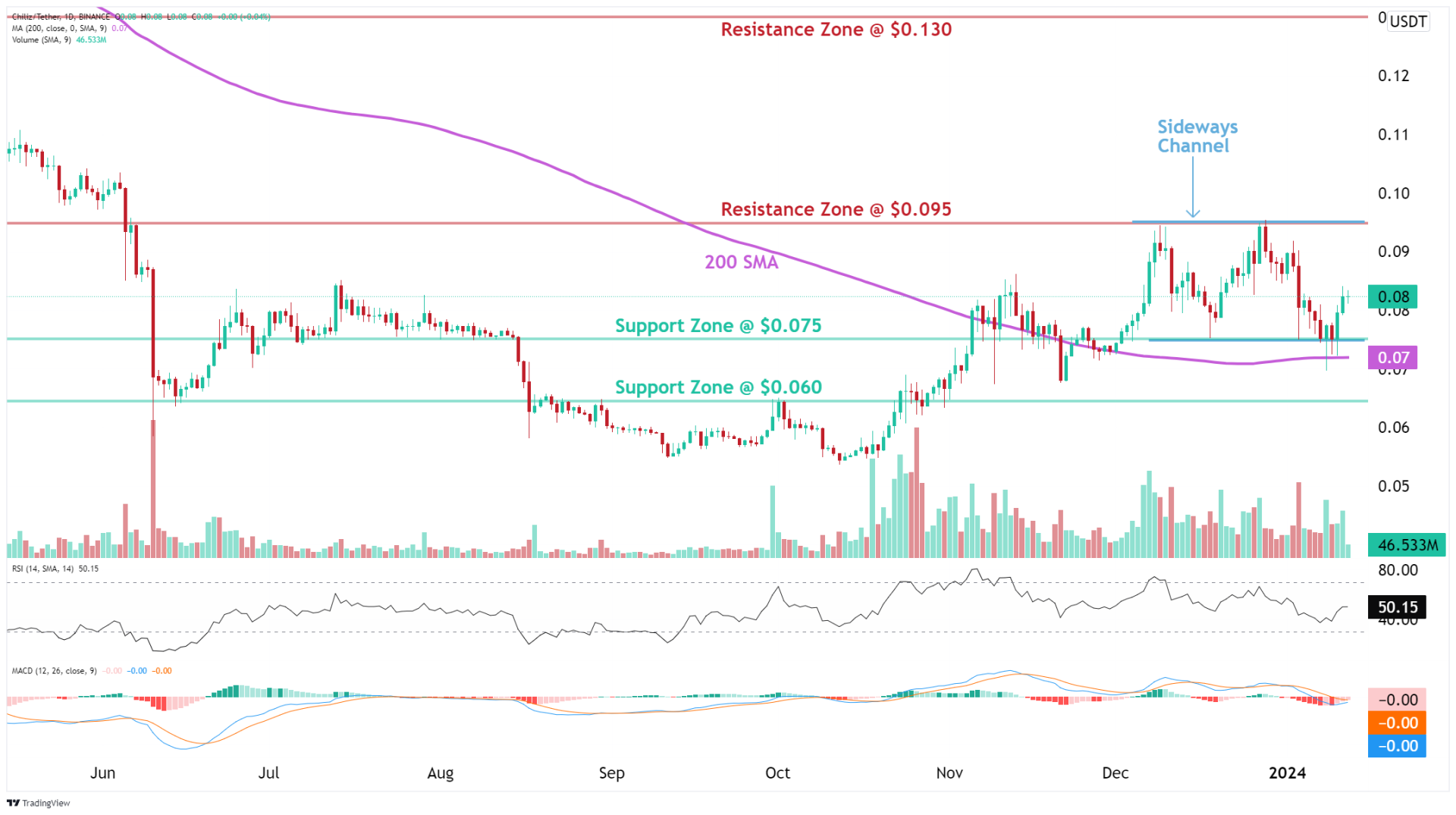

A range day is almost the opposite of a trend day. Instead of moving directionally, price oscillates between defined support and resistance levels. Buyers and sellers remain balanced, preventing sustained momentum in either direction.
During a range day, breakouts frequently fail. The market may briefly move above resistance or below support, only to reverse shortly afterward. Traders who chase these moves often get trapped as price returns back inside the range.
Typical characteristics of a range day include:
- Overlapping candles with mixed direction
- Frequent reversals at support and resistance
- Price repeatedly returning to VWAP
- Stable or declining open interest
- Lower volatility compared to trend days
In a sideways environment, the most effective strategy often involves fading extremes rather than chasing breakouts. Traders look to buy near the lower boundary of the range and sell near the upper boundary.
While range days may appear less exciting, they can offer consistent opportunities for disciplined traders who understand mean-reversion dynamics.
Why Crypto Markets Alternate Between These Structures

Crypto markets naturally alternate between periods of expansion and consolidation. A range day often precedes a trend day, and a trend day may eventually lead to another period of consolidation.
This cycle occurs because markets require time to accumulate positions. During consolidation phases, traders build exposure gradually while price remains confined within a range. Once enough positions accumulate, a catalyst can trigger a breakout.
When that breakout happens, the market shifts into a trend day as momentum builds and trapped traders exit losing positions.
Several forces drive these transitions:
Liquidity concentration
Large clusters of stop orders often accumulate around obvious support and resistance levels. Once price reaches those zones, a surge of market orders can trigger rapid movement.
Leverage dynamics
Because perpetual futures allow high leverage, positions can unwind quickly. Forced liquidations frequently transform small moves into large directional trends.
Global trading sessions
Crypto markets operate across multiple time zones. Liquidity shifts as traders in different regions become active, which can lead to volatility expansion.
Understanding these forces helps traders anticipate when the market may shift from one structure to another.
Indicators That Help Identify the Day Type
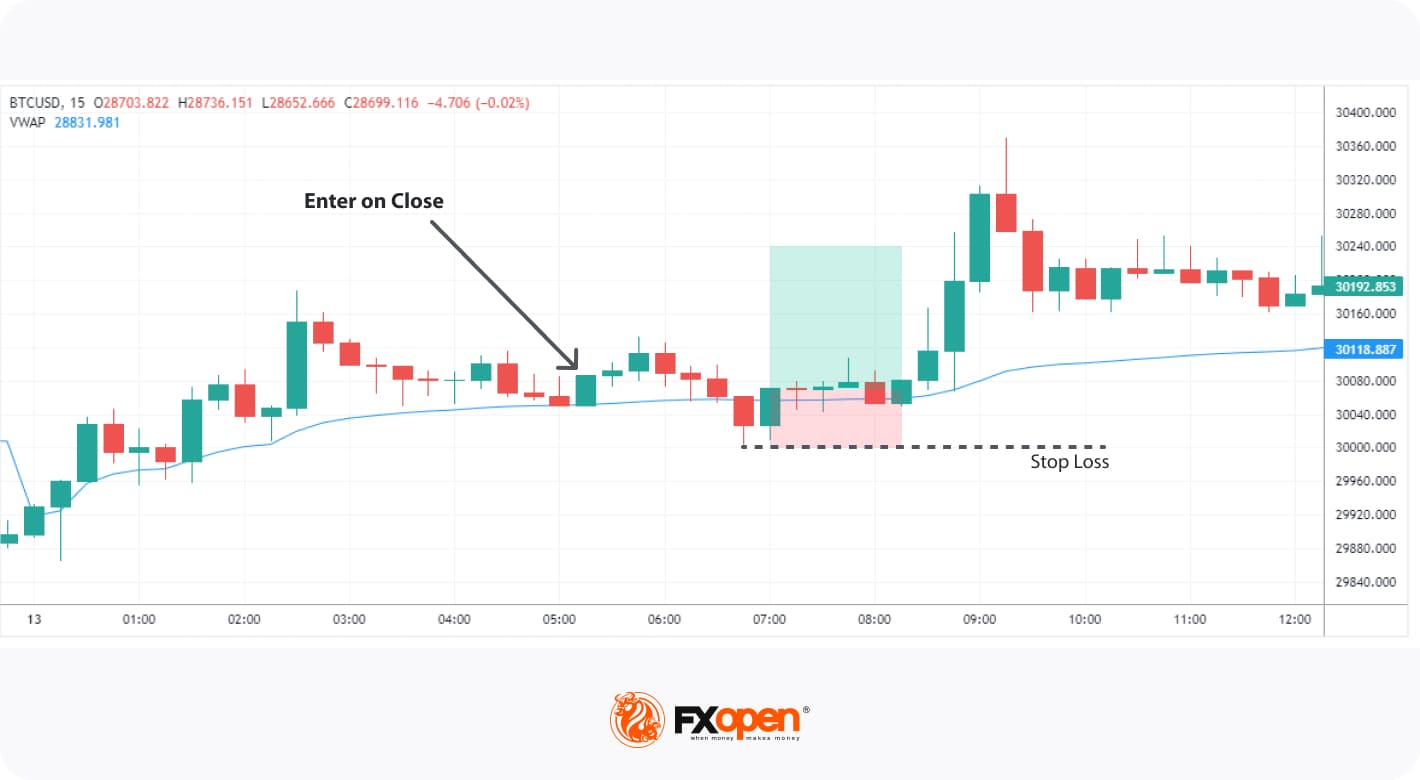
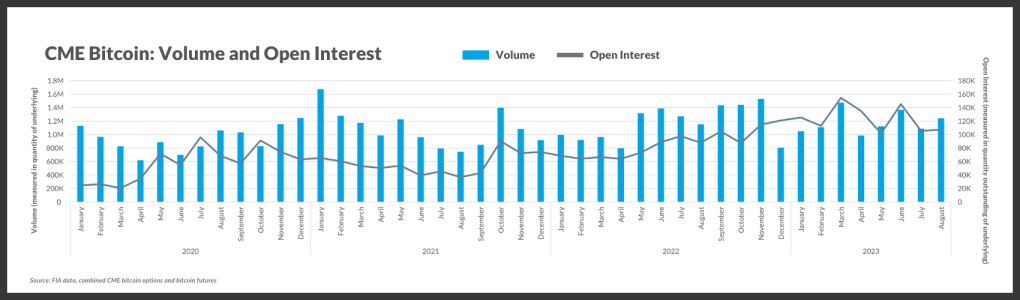
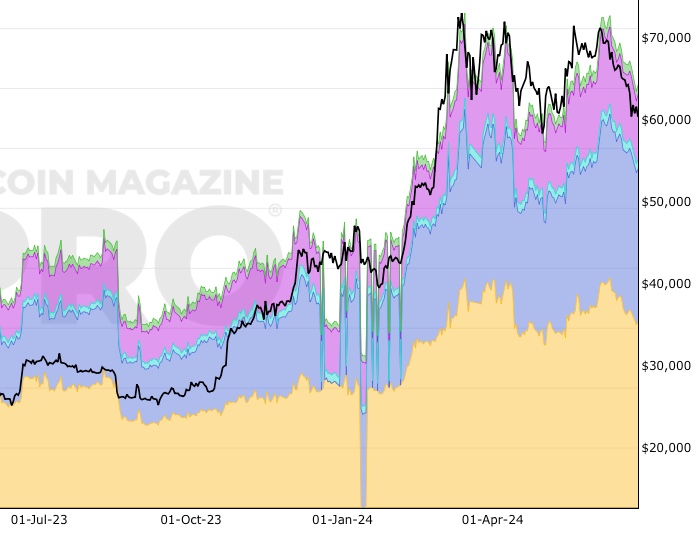
Professional traders rarely rely on a single signal. Instead, they analyze multiple indicators to determine whether the market is behaving like a trend day or a range day.
VWAP (Volume Weighted Average Price)
The VWAP acts as an important benchmark for institutional traders. During a trend day, price typically remains on one side of VWAP for extended periods. Pullbacks toward the level often attract buyers or sellers aligned with the prevailing trend.
In contrast, range days frequently see price oscillating above and below VWAP repeatedly.
Funding Rate
The funding rate reflects positioning within perpetual futures markets. When funding becomes extremely positive, it suggests that many traders are long. Excessively crowded positions can sometimes lead to sharp reversals or liquidation cascades.
Monitoring the funding rate provides insight into potential market imbalances.
Open Interest
Changes in open interest reveal whether traders are adding or closing positions. Rising open interest alongside a directional move often confirms that a trend day is developing.
If price moves while open interest declines, it may indicate that traders are closing positions rather than opening new ones.
Liquidation Clusters
Crypto markets are heavily influenced by liquidations. When price approaches areas with large concentrations of leveraged positions, forced exits can drive powerful momentum.
Tools such as liquidation heatmaps allow traders to identify these zones and anticipate potential volatility.
How Traders Adapt Their Strategies

Once traders determine the market environment, they adjust their strategies accordingly.
Trading a Trend Day
Momentum strategies work best when the market is trending. Traders often focus on:
- Buying pullbacks during an uptrend
- Shorting retracements during a downtrend
- Holding positions longer as momentum builds
Instead of fading moves, “traders align themselves with the dominant direction“
Trading a Range Day
During a range day, the focus shifts to mean reversion.
Traders may:
- Buy near support levels
- Sell near resistance levels
- Take profits quickly before the market reverses
Breakout trades are generally avoided unless accompanied by significant volume or structural changes.
Understanding this distinction prevents traders from applying the wrong strategy to the wrong market condition.
Common Mistakes Traders Make
Even experienced traders sometimes misinterpret market structure. Several mistakes frequently occur when identifying trend days and range days.
One of the most common errors is assuming that every breakout will lead to a sustained trend. In reality, many breakouts fail during range days, trapping traders who enter too aggressively.
Another mistake involves fading strong momentum during a genuine trend day. Traders accustomed to range conditions may repeatedly attempt to short rallies or buy dips that never reverse.
Overtrading is also common during sideways markets. Because price moves back and forth, traders may feel compelled to enter frequent positions, increasing transaction costs and emotional stress.
Recognizing the market structure early helps avoid these pitfalls.
Why This Skill Matters for Long-Term Success
The ability to identify trend days and range days is one of the most valuable skills a trader can develop. Markets constantly shift between expansion and consolidation, and strategies that work in one environment may fail in another.
Professional traders focus less on predicting exact price levels and more on understanding market structure. By observing factors such as VWAP, funding rates, open interest, and liquidations, they gain insight into the underlying forces driving price action.
When traders align their strategy with the prevailing environment, they dramatically increase their probability of success.
Crypto markets may appear chaotic, but beneath the volatility lies a recognizable structure. Learning to distinguish between trend days and range days provides a framework for navigating that complexity and making more informed trading decisions.