

When you buy shares of Michael Saylor’s company, you’re not just buying a software business anymore. You’re buying a highly leveraged, publicly traded vehicle built around one core idea: accumulate as much Bitcoin as possible.
The company formerly known as MicroStrategy — now rebranded as Strategy — has turned itself into what many investors view as a turbocharged Bitcoin proxy.
For retail investors, that changes everything. This is no longer a traditional tech stock. It’s a volatility amplifier.
Below is a clear breakdown of what’s happening, how the strategy works, and what risks matter most at today’s Bitcoin price levels.
Who Is Michael Saylor — And Why Does He Matter?


Michael Saylor is the founder of MicroStrategy and the architect of one of the boldest treasury strategies in corporate history.
Around 2020, Saylor made a decision that would redefine the company:
Instead of holding cash on the balance sheet, the company would buy Bitcoin.
Then it would keep buying more.
And it would raise money to buy even more.
Saylor’s public stance is simple:
- Bitcoin is superior to cash.
- Fiat currencies lose purchasing power.
- Long-term holders will win.
Retail investors should understand this clearly: when you invest in Strategy, you are investing in Saylor’s conviction.
From Software Company to Bitcoin Treasury Machine



MicroStrategy used to be known for enterprise analytics software. That business still exists. But today, it plays second fiddle to the company’s Bitcoin accumulation strategy.
Here’s how the model works in simple terms:
- Raise capital (issue stock, convertible debt, or other securities)
- Buy Bitcoin
- Hold it
- Repeat
Over time, the company has accumulated hundreds of thousands of BTC, making it the largest corporate holder of Bitcoin in the world.
For retail investors, this means:
- The stock behaves more like a leveraged Bitcoin ETF than a traditional tech company.
- Earnings and stock price movement are heavily tied to Bitcoin’s price.
- Volatility is part of the design, not an accident.
How the Leverage Works (And Why It Amplifies Moves)


Strategy doesn’t just buy Bitcoin with spare cash. It has raised billions through:
- Convertible notes
- Equity offerings
- Preferred stock
A convertible note is debt that can turn into shares later. When the stock is strong, this is attractive financing. When the stock falls, it becomes riskier.
Here’s what retail investors need to understand:
When Bitcoin rises, Strategy stock often rises more.
When Bitcoin falls, Strategy stock often falls harder.
That’s leverage in action.
The company’s stock tends to:
- Trade at a premium to its underlying Bitcoin holdings during bull markets
- See that premium shrink during downturns
That premium is critical. It allows the company to issue stock at higher prices and buy more Bitcoin efficiently. If the premium disappears, the strategy becomes more expensive to execute.
The Accounting Change That Increased Volatility

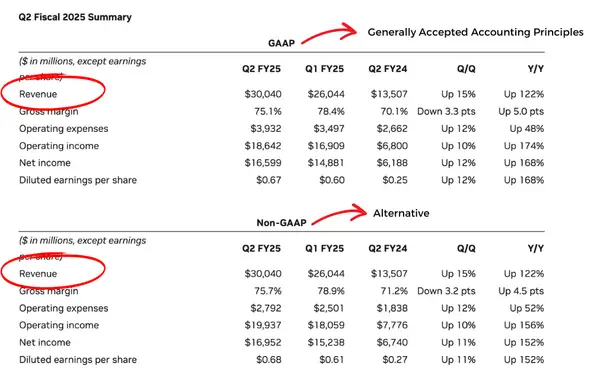

A recent accounting rule change requires companies to report Bitcoin at fair value.
What does that mean for retail investors?
If Bitcoin drops sharply in a quarter:
- The company may report large paper losses
- Even if it didn’t sell any Bitcoin
If Bitcoin rallies:
- The company may report large gains
This means earnings will swing dramatically based on Bitcoin’s market price.
For long-term believers, this is noise.
For short-term traders, this creates explosive headline risk.
What Happens at Today’s Bitcoin Price?
At current Bitcoin price levels (mid-$60,000s), the pressure points become more visible:
1. Unrealized Drawdowns
If Bitcoin trades below the company’s average purchase price, headlines start using words like “underwater” or “paper losses.” That can scare weaker hands.
Retail takeaway:
Unrealized losses are not forced losses — unless the company is pressured to sell or refinance under stress.
2. Cost of Capital Risk
If the stock falls sharply:
- Raising new money becomes more expensive
- Convertible terms get worse
- Dilution increases
Retail takeaway:
The strategy depends on access to capital markets. Watch how easily the company raises money.
3. Premium Compression
In bull markets, the stock often trades at a significant premium to the value of its Bitcoin.
In weak markets:
- That premium shrinks
- The stock can fall faster than Bitcoin
- Volatility spikes
Retail takeaway:
If you buy Strategy, expect amplified moves.
The Bull Case vs. The Bear Case


The Bull Case
Supporters argue:
- Bitcoin is a long-term appreciating asset.
- Strategy is the most aggressive corporate accumulator.
- If Bitcoin goes significantly higher over time, the leverage becomes a feature — not a bug.
In this scenario, retail investors benefit from:
- Upside amplification
- Financial engineering advantages
- Continued accumulation
The Bear Case
Critics argue:
- The strategy embeds structural leverage risk.
- Capital markets may not always be friendly.
- Long stagnation in Bitcoin could pressure the balance sheet.
If Bitcoin stays flat for years or drops significantly, the compounding machine slows down — and dilution risk rises.
What Retail Investors Should Actually Watch
If you own or are considering buying Strategy shares, focus on these metrics:
- Bitcoin holdings growth rate – Is accumulation continuing steadily?
- Average purchase price vs. market price – Are they buying strength or buying dips?
- New debt terms – Are interest rates and conversion premiums attractive?
- Stock premium to net asset value – Is the market still valuing it above its Bitcoin stack?
- Dilution levels – Are new shares being issued aggressively?
This isn’t a “buy and forget” stock. It requires awareness.
Is Strategy Right for Retail Investors?
Strategy is not a conservative tech stock.
It is:
- A leveraged Bitcoin vehicle
- A capital markets machine
- A volatility amplifier
If you believe deeply in long-term Bitcoin appreciation and can tolerate major drawdowns, it may align with your thesis.
If you:
- Struggle with volatility
- Panic during 30–50% drawdowns
- Prefer predictable earnings
This may not be your vehicle.
Final Thoughts: Conviction Meets Capital Structure
Michael Saylor’s strategy is bold. It’s coherent. It’s high conviction.
But conviction alone doesn’t determine outcomes.
Capital structure does.
At today’s Bitcoin price levels, the company isn’t broken — but it is being tested. Retail investors should understand that the upside is asymmetric, but so is the volatility.
Buying Strategy means buying into:
- A belief system
- A financial engineering model
- And a long-term bet on Bitcoin scarcity
The question isn’t whether Saylor believes.
The question is whether you do — and whether your risk tolerance matches the ride.