
The cryptocurrency industry has seen thousands of blockchain projects emerge over the past decade, but only a few attempt to solve problems beyond finance. One of the most ambitious examples is TAO, the native token of the Bittensor network, a decentralized protocol designed to create an open marketplace for artificial intelligence.
While most cryptocurrencies focus on payments, decentralized finance, or digital assets, Bittensor aims to solve a much larger challenge: how to build a global network where machine intelligence can be created, shared, and monetized collaboratively.
This vision has attracted attention from developers, investors, and traders who believe that the intersection of blockchain technology and artificial intelligence could become one of the most important technological movements of the next decade.
In this article, we explore the following:
- the history of TAO;
- how the Bittensor network was created;
- the major milestones in its development;
- and why it has gained so much attention in the crypto and AI communities.
The Vision Behind Bittensor
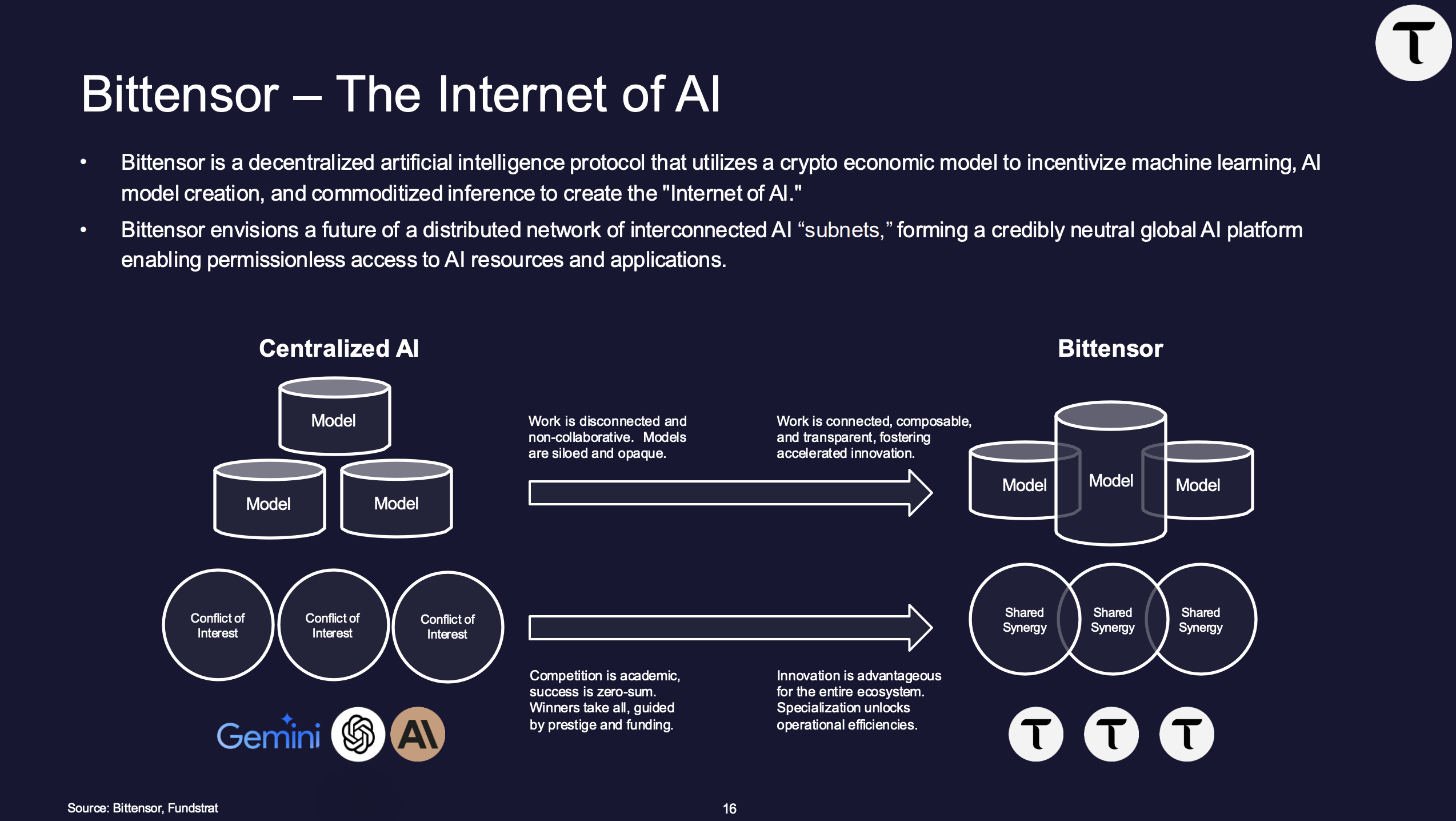

Bittensor was designed to create a decentralized marketplace for machine intelligence. In traditional AI development, large companies control data, computing resources, and the training of models. This centralized structure gives a small number of corporations significant power over how artificial intelligence is developed and deployed.
The creators of Bittensor believed that AI development should be open, collaborative, and permissionless, similar to how Bitcoin decentralized money.
Instead of relying on a single organization, Bittensor allows anyone in the world to contribute computing power or machine learning models to a shared network. Participants are rewarded with TAO tokens, which function as both an incentive mechanism and a way to access the network’s collective intelligence.
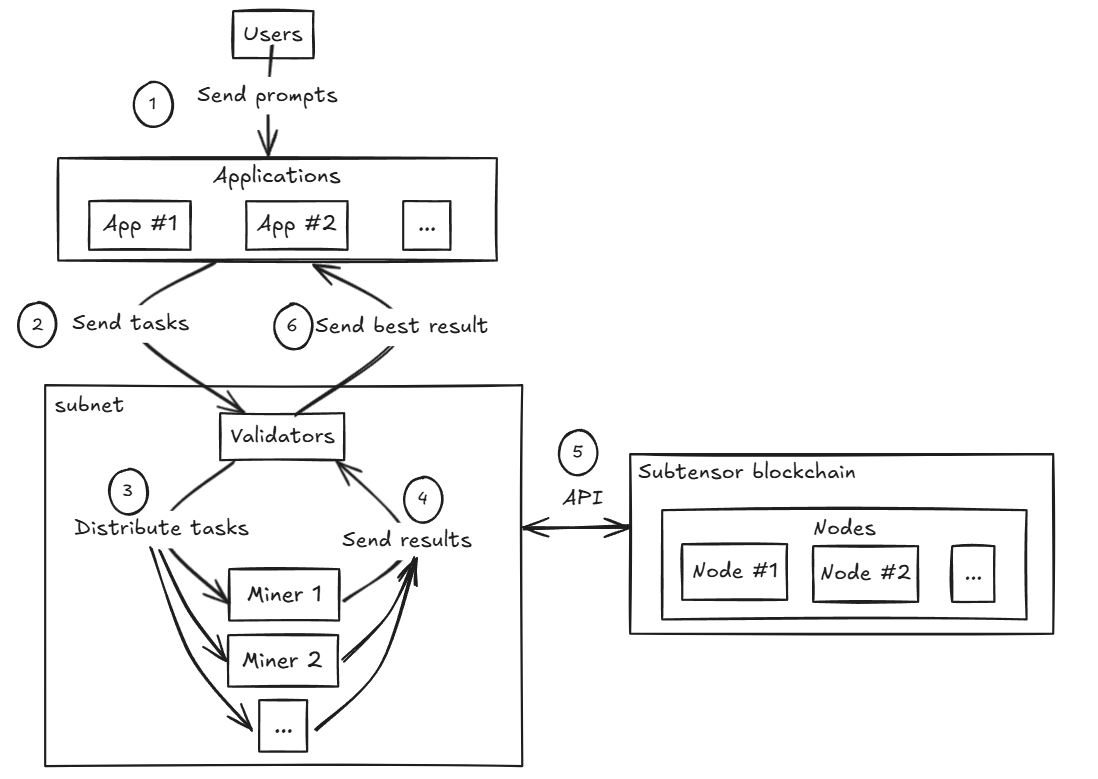
In this system, computers act as both producers and validators of machine learning results. Nodes submit answers to queries, and the network ranks them according to the usefulness of their output. The best-performing participants earn rewards in TAO.
This creates a competitive environment where the most useful AI models rise to the top.
The Founders and Early Development


The Bittensor project was founded by Jacob Robert Steeves and Ala Shaabana, two researchers with strong backgrounds in machine learning and computer science.
Jacob Steeves previously worked as a machine learning engineer and had experience in advanced neural network research. Ala Shaabana, meanwhile, held academic positions focused on artificial intelligence and machine learning systems.
The founders began exploring the concept of decentralized machine intelligence around 2019, when they formally launched the Bittensor project under the OpenTensor Foundation.
However, the idea itself was developed earlier. The team published research proposing a peer-to-peer market for machine intelligence, where neural networks could learn from each other and rank each other’s contributions.
This idea became the conceptual foundation for the Bittensor network.
The Launch of TAO and the Bittensor Network


The Bittensor network and its native cryptocurrency TAO officially launched in 2021.
Unlike many cryptocurrency projects that raise money through venture capital funding or token sales, TAO was distributed through a fair launch model, meaning no tokens were pre-mined or allocated to insiders.
Instead, tokens are earned by contributing value to the network.
Participants who run nodes can earn TAO by providing useful machine learning outputs or by validating the work of other nodes. The system rewards participants according to the informational value they bring to the network.
This incentive structure resembles the mining model used by Bitcoin, but instead of securing transactions, miners help build and improve artificial intelligence systems.
The token supply is capped at 21 million TAO, mirroring Bitcoin’s fixed supply model.
Early Network Iterations and Upgrades


Like most blockchain projects, Bittensor went through several iterations before reaching its current structure.
The first experimental version of the network was launched in January 2021 under the codename Kusanagi.
However, developers soon discovered performance and consensus issues. The network was temporarily halted in May 2021 while engineers worked to resolve these problems.
Later that year, the project relaunched under a new version called Nakamoto, which introduced improvements to the network’s consensus mechanism.
In March 2023, Bittensor transitioned away from earlier architectures and launched its own independent blockchain to better support large-scale machine learning computations.
This transition represented a major milestone in the project’s evolution.
How Bittensor Works


The Bittensor network operates using a mechanism known as Proof of Intelligence.
In traditional blockchain systems, miners compete to solve mathematical puzzles. In Bittensor, miners compete to produce useful machine learning outputs.
The system works roughly like this:
- Nodes generate machine learning responses to network queries.
- Other nodes evaluate and rank these responses.
- The network distributes TAO tokens based on the usefulness of each contribution.
This ranking system creates a decentralized reputation economy for artificial intelligence.
Participants who consistently provide valuable information receive higher rankings and earn more TAO tokens.
The network also includes validators, which verify that the system remains fair and that nodes are not manipulating the ranking process.
The Rise of AI-Focused Crypto


The rapid growth of artificial intelligence has created enormous interest in projects that combine AI and blockchain technology.
As large language models and AI agents become more powerful, the demand for computing power, training data, and machine learning infrastructure continues to increase.
Bittensor positions itself as a platform where these resources can be coordinated in a decentralized way.
Instead of relying on a handful of tech companies, developers can use the Bittensor network to access AI services or contribute their own models.
This idea has helped position TAO as one of the most talked-about AI cryptocurrencies in the market.
The Introduction of Subnets
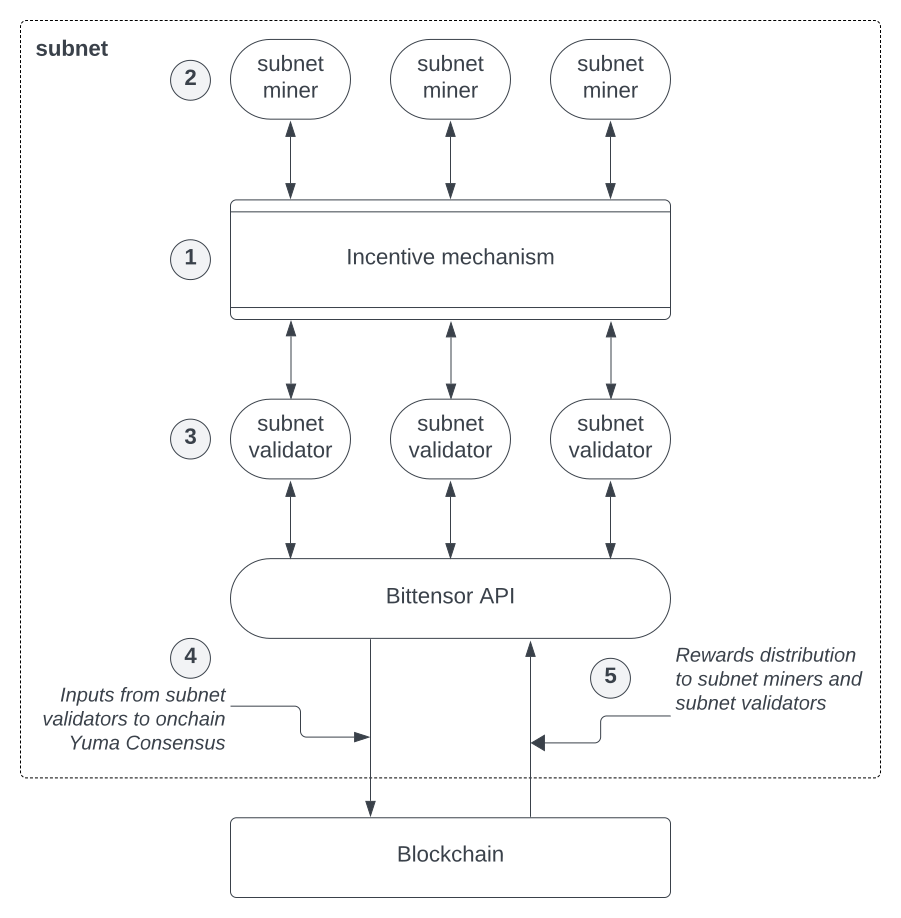
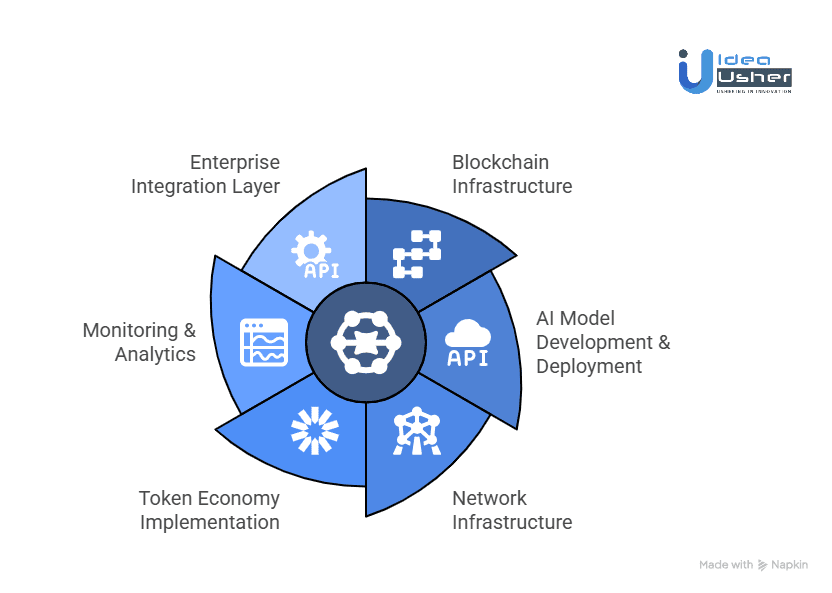

One of the most important developments in the Bittensor ecosystem was the introduction of subnets.
Subnets are specialized networks within Bittensor that focus on specific tasks.
Each subnet may be designed for a particular AI function, such as:
- Data indexing
- Model training
- AI inference
- Image generation
- AI agent development
This modular design allows developers to build new AI applications on top of the Bittensor network.
Over time, the number of subnets has grown significantly as the ecosystem expands.
Market Growth and Investment Interest


As the AI narrative gained momentum in the crypto industry, TAO began attracting significant investor attention.
The project’s combination of artificial intelligence infrastructure and blockchain economics positioned it as a unique asset within the digital asset ecosystem.
Major investors and crypto venture firms have shown interest in the project, and infrastructure companies have begun building services around the Bittensor network.
At the same time, the broader crypto market started paying closer attention to AI-related tokens.
The idea that decentralized networks could coordinate machine intelligence at a global scale sparked debates about whether projects like Bittensor could compete with centralized AI companies in the long term.
Tokenomics and Incentives
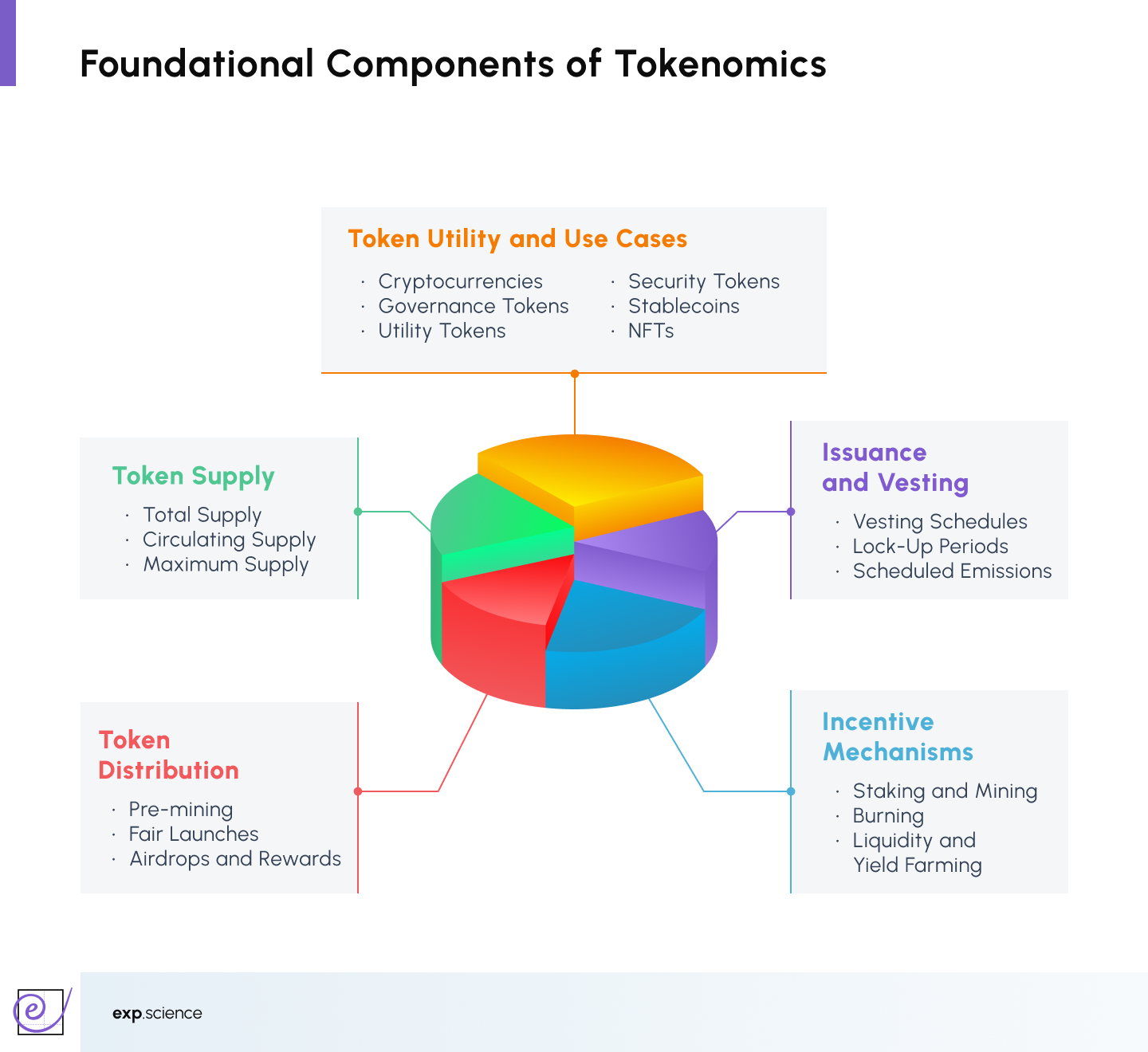

The TAO token is central to the Bittensor ecosystem.
It performs several key functions:
- Rewarding miners and validators
- Providing access to AI services within the network
- Supporting governance and decision making
- Securing the network through staking
The emission schedule distributes new TAO tokens to participants who contribute valuable machine intelligence.
Daily emissions are split between miners and validators, ensuring that both computational work and network security are incentivized.
This economic structure is designed to encourage long-term participation and continuous improvement of AI models on the network.
Recent Developments and Future Potential


In recent years, the Bittensor ecosystem has continued to evolve with new upgrades and improvements.
One of the most notable changes has been the introduction of dynamic TAO, which ties token rewards more closely to the productivity of specific subnets.
This upgrade aims to create a more efficient system where AI networks compete for resources based on their real-world usefulness.
Meanwhile, institutional interest in AI infrastructure continues to grow, and some investment firms have explored launching financial products linked to TAO.
If the demand for decentralized AI platforms continues to expand, Bittensor could play a significant role in the future of both industries.
Final Thoughts
The history of TAO and the Bittensor network reflects one of the most ambitious attempts to combine artificial intelligence and blockchain technology.
From its origins as an academic concept to the launch of a global decentralized AI network, Bittensor has evolved into a unique project within the cryptocurrency ecosystem.
Its goal is not simply to create a digital currency but to build a marketplace where machine intelligence itself becomes a tradable resource.
Whether Bittensor ultimately succeeds in reshaping the AI landscape remains to be seen. However, the project has already demonstrated how blockchain incentives can be used to coordinate large networks of computing power and machine learning models.
As both artificial intelligence and decentralized technologies continue to advance, the story of TAO may become one of the most important chapters in the history of crypto innovation.