
⚡ Quick Verdict
Robinhood wins for simplicity, fiat on-ramps, and US-regulated stock ownership. Hyperliquid wins for serious crypto trading — lower fees, self-custody, leverage, shorting, and 230+ markets including tokenised stocks and gold. Most experienced traders use both: Robinhood to convert dollars into USDC, Hyperliquid to actually trade.
If you started investing on Robinhood — you’re not alone. It’s the app that made commission-free trading mainstream and introduced an entire generation to stocks, ETFs, and eventually crypto. But as your interest in crypto grows, you’ll hit Robinhood’s ceiling fast. No leverage. No shorting. No real self-custody. Spread-based fees that look like “free” but aren’t. And here’s the one that matters most: when you hold crypto on Robinhood, you don’t actually own it — Robinhood does.
Hyperliquid is a fundamentally different kind of platform. This comparison breaks down every major dimension so you can see clearly what each platform is built for — and make an informed decision about where your capital and your trades belong.
Side-by-Side Comparison
The Fee Truth — Robinhood Is Not Actually Free
“Commission-free” is Robinhood’s most effective marketing line. But commission-free doesn’t mean cost-free — it means Robinhood makes money differently. For crypto specifically, Robinhood makes money on the spread — the difference between the price they show you and the price they actually execute at.
Robinhood — How fees actually work
You want to buy $1,000 of BTC. Robinhood shows you a price. The actual execution price is slightly worse — that difference is called the spread. On crypto, this spread can be 0.5–2% per trade depending on the coin and conditions. On a $1,000 BTC buy, you might pay $5–$20 in hidden spread cost. There’s no line item for it. It’s simply the difference between what you see and what you get.
Hyperliquid — How fees actually work
You place a $1,000 taker order. Hyperliquid charges exactly 0.045% — $0.45. That’s it. It’s visible, fixed, and the same for every user. If you use a limit order instead, Hyperliquid pays you 0.010% — +$0.10. Every fee is explicit, on-chain, and publicly verifiable. There are no hidden spreads, no payment-for-order-flow arrangements, and no surprise costs.
💰 Real-world fee comparison on a $1,000 BTC trade
Robinhood (estimated spread)
−$5 to −$20
Hyperliquid market order
−$0.45
Hyperliquid limit order
+$0.10 (rebate)
The Custody Question — Who Actually Owns Your Crypto?
This is the most important difference between the two platforms — and the one most beginners don’t think about until something goes wrong.
⚠️
Robinhood — you have a claim, not ownership
When you “buy Bitcoin” on Robinhood, you’re buying a position in Robinhood’s books. Robinhood holds the actual BTC in their custody. You cannot send your Bitcoin to another wallet, use it in DeFi, or withdraw it as BTC — only as US dollars. If Robinhood were to face financial difficulties, your crypto would be a claim against their estate, not an asset in your possession. This is the same custodial risk that brought down FTX, Celsius, BlockFi, and others. Robinhood is more regulated than those were — but the structural risk is identical.
✅
Hyperliquid — your wallet, your assets
On Hyperliquid, your USDC lives in smart contracts on a public blockchain. No company holds it. No company account can be raided. The code is publicly auditable and the on-chain record is permanent. You connect with your own wallet (MetaMask or similar) and can withdraw your funds at any time — no approval needed, no delays, no limits. Hyperliquid the company could cease to exist tomorrow and your funds would still be accessible through the blockchain.
What Each Platform Is Actually Good At
Where Robinhood wins
✓
Fiat on-ramp. Connect your bank account and deposit dollars directly. No crypto knowledge required to get started. This is genuinely Robinhood’s biggest practical advantage over Hyperliquid, which requires you to already have USDC to deposit.
✓
Actual stock and ETF ownership. When you buy Apple on Robinhood you own shares of Apple. SIPC protection applies. Dividends are real. This matters if stocks are part of your strategy and you want genuine ownership rather than price exposure.
✓
Simplicity for beginners. The interface is deliberately minimal. You can buy Bitcoin in 30 seconds without understanding wallets, gas fees, or blockchain networks. For someone’s first $100 in crypto, Robinhood removes every technical barrier.
✓
Full US availability. No VPN needed. Fully licensed and regulated in the US. For traders who aren’t comfortable with a VPN requirement, Robinhood has no access barriers.
Where Hyperliquid wins
✓
Dramatically lower fees. 0.045% taker vs 0.5–2% spread. At any meaningful trading volume, the fee difference compounds into a significant annual figure. See the market vs limit orders guide for the exact maths.
✓
Shorting and leverage. Robinhood offers no way to profit from falling crypto prices. Hyperliquid lets you go short on any of 230+ markets with up to 50x leverage. This is a fundamental capability gap for anyone who wants to trade rather than just invest.
✓
24/7 everything — including stocks. Robinhood’s stock trading is restricted to market hours. Hyperliquid’s RWA perps (Tesla, Nvidia, Apple, S&P 500, gold) trade 24 hours a day, 7 days a week. News breaks at 2am — Hyperliquid traders can act. Robinhood traders wait for the open.
✓
Passive yield on idle capital. Robinhood Gold pays around 5% on uninvested cash. Hyperliquid’s HLP vault has historically returned 15–30% APR on USDC deposits with no active trading required. See the HLP vault guide.
✓
True self-custody. You own the assets. No FTX scenario is possible when you hold your own keys. This is not a minor point — it’s the foundational difference between holding an IOU and holding an asset.
Who Each Platform Is For — Honestly
Robinhood makes sense if you…
Are completely new to trading and investing
Want to buy and hold actual stocks and ETFs
Need a simple fiat-to-crypto on-ramp
Prefer a fully US-regulated environment
Want SIPC protection on your cash and stocks
Aren’t ready to manage a crypto wallet yet
Want to buy and hold actual stocks and ETFs
Need a simple fiat-to-crypto on-ramp
Prefer a fully US-regulated environment
Want SIPC protection on your cash and stocks
Aren’t ready to manage a crypto wallet yet
Hyperliquid makes sense if you…
Want to actively trade crypto with real tools
Want to profit from both rising and falling prices
Care about keeping control of your own funds
Want dramatically lower fees on every trade
Want to trade stocks and gold outside market hours
Are ready to learn self-custody basics
Want to profit from both rising and falling prices
Care about keeping control of your own funds
Want dramatically lower fees on every trade
Want to trade stocks and gold outside market hours
Are ready to learn self-custody basics
📋 The practical stack most traders end up using
Robinhood (or Coinbase/Kraken) → buy USDC with dollars → transfer to Hyperliquid → trade. The two platforms aren’t competing for the same job. Robinhood is the fiat gateway. Hyperliquid is the trading engine. Use each for what it’s actually built for and you get the best of both: the simplicity of the fiat on-ramp and the power of the professional trading platform.
All Hyperliquid Comparisons
HL vs Coinbase
HL vs Binance
HL vs Bybit
HL vs Kraken
HL vs dYdX
HL vs GMX
HL vs Aave
HL vs Drift
HL vs Robinhood ← you are here
Frequently Asked Questions
The Bottom Line
Robinhood and Hyperliquid are not really competing for the same trader. Robinhood is an investing app with crypto features. Hyperliquid is a professional crypto trading platform that happens to also offer tokenised stock exposure. The question isn’t which one to choose — it’s understanding what each one is actually built for.
If you want to actively trade crypto — with real tools, real fees, real custody, and real markets — Hyperliquid is the platform. Use Robinhood or Coinbase to get your dollars into USDC, and Hyperliquid to do everything after that.
Ready to Try Hyperliquid?
The Ultimate Guide walks you through wallet setup, first deposit, and first trade — step by step from scratch.
| READ THE ULTIMATE GUIDE → |
📘 CryptoJag Digital Product
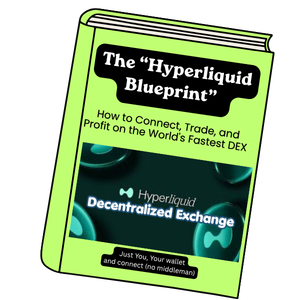
The Hyperliquid Blueprint
How to Connect, Trade, and Profit on the World’s Fastest DEX — everything a Robinhood-to-Hyperliquid switcher needs.
| GET THE BLUEPRINT → |
🎬 Video Courses
Watch. Follow along. Get it done.
Short, focused video courses that walk you through exactly what to do — on screen, step by step.
🎬 Flagship Course
DeFi Demystified
9-module beginner to passive income
$97 one-time
| Get Instant Access → |
🦊 Micro Course
Add Network & Token to MetaMask
2-part series — wallet fully set up
$37 one-time
| Get It Now → |
🎁 Switch to Hyperliquid — Get 4% Off
Sign Up via My Referral Link
Get a permanent 4% discount on taker fees applied automatically when you connect your wallet through my link.
🇺🇸 US Residents: Use a VPN first — I use FastVPN by Namecheap.
Use code CRYPTOJAG or click the link above
🎬 Watch the Robinhood-to-Hyperliquid transition on YouTube
Subscribe to CryptoJag for step-by-step Hyperliquid walkthroughs built for traders making the switch.
| ▶ SUBSCRIBE ON YOUTUBE |

— Chris
Founder · CryptoJag
I started on Robinhood like a lot of people did — it’s genuinely a good entry point for someone who has never bought a stock or a coin before. What changed my view was realising that “buying Bitcoin on Robinhood” isn’t the same thing as owning Bitcoin. Once that clicked, and once I understood what a spread-based fee actually means over time, the move to self-custody became obvious. I still use a CEX to convert dollars to USDC. I do everything else on Hyperliquid. That stack — CEX as gateway, Hyperliquid as engine — is the right setup for any serious crypto trader in 2026.
This post is for educational purposes only and does not constitute financial or legal advice. Platform features, fees, and availability are accurate as of October 2026 and subject to change. CryptoJag earns a referral commission if you sign up via the CRYPTOJAG link — at no extra cost to you. The VPN section is informational only and does not constitute legal advice regarding US regulatory compliance.