
Everyone in DeFi has heard the word. Yield farming. It sounds like something between a get-rich-quick scheme and a Wall Street derivatives desk — and depending on how you do it, it can be either one. The difference between the people who quietly earn consistent returns from yield farming and the people who watch their portfolio evaporate comes down to one thing: understanding what you’re actually doing before you deposit a single dollar.
If you’ve been following the DeFi Fundamentals series, you already understand liquidity pools and the mechanics behind impermanent loss. Yield farming sits on top of all of that — and it comes with its own set of traps that catch beginners off guard every single time a new protocol launches with a flashy APY number.
This post is the plain-English guide to yield farming that most DeFi tutorials skip straight past.
What Is Yield Farming — Actually?
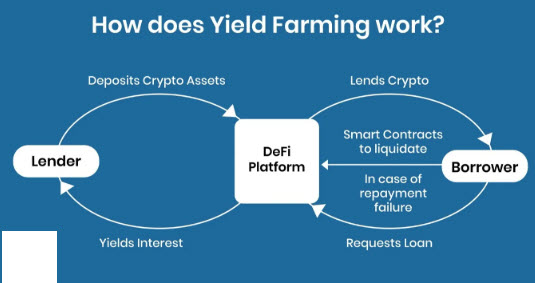
Yield farming is the practice of putting your crypto assets to work across DeFi protocols in exchange for rewards — usually in the form of additional tokens, trading fees, or a combination of both. At its simplest, you deposit assets into a protocol, the protocol uses those assets to generate some kind of economic activity, and you receive a portion of the returns.
Sound familiar? It should. It’s not structurally that different from depositing money in a savings account and collecting interest — except the interest rates are orders of magnitude higher, the risks are orders of magnitude greater, and the mechanics are infinitely more complex than anything a bank has ever offered a retail customer.
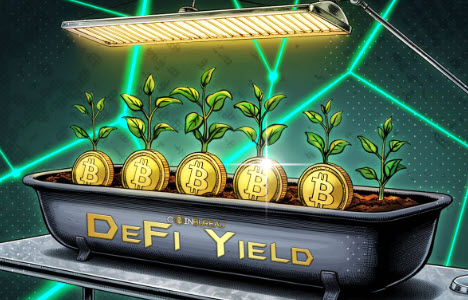
The “farming” metaphor is actually pretty useful. You’re planting capital into a protocol the way you’d plant seeds in a field. The field is the DeFi ecosystem. The harvest is the yield. And just like real farming, the quality of your harvest depends entirely on what you planted, where you planted it, and what the conditions were like while it was growing.
Where Does the Yield Actually Come From?
This is the question most beginners never think to ask — and it’s the most important one. In traditional finance, interest comes from somewhere real: someone borrows your money and pays you for the privilege. In DeFi, yield comes from a few different places, and knowing the difference between them is what separates a sustainable strategy from a ticking time bomb.
Trading fees. When you provide liquidity to a decentralized exchange, every trade that happens through your pool generates a small fee. A portion of that fee goes to you. This is real, sustainable yield — it exists because real economic activity is happening and you’re getting paid to facilitate it.
Lending interest. On platforms like Aave or Compound, borrowers pay interest on the crypto they borrow. Lenders receive that interest. Again, real yield from real economic demand.
Protocol token emissions. This is where things get complicated — and dangerous. Many DeFi protocols attract liquidity by printing their own native token and distributing it as a reward to users who deposit. The APY looks incredible on launch day. But those tokens have value only as long as people believe they have value. When the emissions slow down, the price collapses, and anyone still holding the farming rewards watches them go to near zero. This is how most of the legendary 10,000% APY farms end: with the early depositors rich and everyone else holding worthless governance tokens.
The safest yield farming stacks fee-based and lending-based income. The riskiest stacks emission-based rewards on top of already-risky positions. Most beginners chase the emissions and wonder why their “yield” disappeared.
The Yield Farming Stack — How Strategies Actually Work

Experienced yield farmers don’t just deposit into one protocol and wait. They build what’s called a “stack” — a series of steps that compounds yield across multiple protocols simultaneously. Here’s a simple version of how it works.
Step one: you deposit ETH into a lending protocol like Aave and receive aETH — a token representing your deposit that earns lending interest automatically.
Step two: you take that aETH and deposit it into a liquidity pool on a DEX, where it earns trading fees on top of the lending interest it’s already generating.
Step three: some protocols let you take your LP tokens from step two and stake them in a “farm” to earn additional protocol token rewards on top of everything already stacking up below.
Each layer adds yield. Each layer also adds risk. A vulnerability at any point in the stack can collapse everything above it. This is why the complexity of a yield farming strategy should always be proportional to your understanding of every protocol involved — not proportional to how attractive the headline APY looks.
The same psychology that drives bad trading decisions drives bad yield farming decisions. Chasing the highest number. Moving capital before understanding the new protocol. Ignoring warning signs because the dashboard is green. The market extracts money from impatience just as efficiently in DeFi as it does on a spot trading chart.
The Risks Nobody Puts in the Marketing Material

Smart contract risk. Every DeFi protocol runs on smart contracts — code that executes automatically with no human intervention. If that code has a bug, an exploit, or a backdoor, your funds can be drained in a single transaction. No customer service. No refunds. No FDIC insurance. This is the foundational risk of everything in DeFi and it never goes away.
Impermanent loss. As we covered in the previous post in this series, providing liquidity exposes you to divergence loss whenever your token pair’s prices move in different directions. High-yield pools often pair volatile tokens precisely because the fees need to be high to compensate for the loss — but those fees don’t always win.
Rug pulls and exit scams. A new protocol launches with anonymous founders, audited-looking contracts, and a 500% APY. Liquidity floods in. Then the founders drain the treasury and disappear. This is not a rare edge case. It happens constantly, and it happens to people who consider themselves experienced. Stick to protocols with public teams, multiple reputable audits, and a track record that extends beyond the current bull market hype cycle.
Token value collapse. Even if the protocol is legitimate and the smart contracts are clean, the reward tokens can still go to zero. If you’re farming a protocol that pays you in its own governance token, that token’s value is determined by demand — and demand for governance tokens of underperforming protocols trends in one direction.
How to Approach Yield Farming Without Getting Wrecked
None of this means yield farming is off-limits for retail crypto investors. It means it requires the same discipline and research that any serious investment requires — and then some.
Start with established protocols that have been running for multiple years, have undergone several independent security audits, and have a track record that survived at least one major market downturn. Uniswap, Aave, Curve, and Compound aren’t exciting — but they’re still here. Most of the protocols promising 10x their yield rates are not.

Prioritize fee-based yield over emission-based yield. If the majority of a pool’s APY comes from trading fees rather than protocol token rewards, the income has a real economic basis. If 80% of the APY evaporates the moment the token price drops, that’s not yield — that’s an illusion.
Understand what you’re depositing into before you deposit. Read the documentation. Understand what the smart contract does with your funds. Know the withdrawal conditions. Know the fee structure. This sounds obvious, but the vast majority of people who lose money in DeFi yield farming never did this basic homework.
And consider managed alternatives. This is a core part of what drew me to Hyperliquid vaults as a yield strategy — rather than manually managing liquidity positions across multiple protocols, a well-run vault does the position management for you while you maintain custody of the underlying decision. It’s not a guarantee of returns, but it removes the operational complexity that causes most retail investors to make expensive mistakes. I break down exactly how those work in why Hyperliquid is becoming more than just a trading platform.
The term “yield farming” was popularized during the DeFi Summer of 2020 when Compound Finance began distributing its COMP governance token to users of the protocol. Within weeks billions of dollars flooded into DeFi as users chased the rewards — creating the first major liquidity mining craze in crypto history and establishing the yield farming playbook that every protocol since has copied in some form.
The Takeaway
Yield farming is real. The returns are real. And the losses are real. The difference between the two comes down to one thing that almost no flashy DeFi Twitter account will ever tell you: understanding what you’re doing before the money moves.
The protocols that will still be here in five years are not the ones paying 5,000% APY today. They’re the ones that generate real economic activity, pay sustainable fees to their liquidity providers, and don’t require a constantly inflating token price to make the math work. Find those protocols, understand them deeply, and farm them patiently — and yield farming becomes a legitimate component of a serious passive income strategy.
Rush in chasing numbers you don’t understand, and it’s just an expensive way to learn a lesson that was always available for free.
I break down the mechanics behind passive income, liquidity, yield farming, and Hyperliquid vaults in plain English — so you understand what you’re doing before you risk a dollar.
Explore the DeFi Fundamentals Series →