
Crypto has never stood still for long.
In just over a decade, it’s evolved from an obscure experiment discussed on niche forums into a global asset class held by institutions, governments, and everyday users around the world. Yet despite how far it’s come, many people still ask the same question:
Where is crypto actually going next?
The next five years will likely be the most important period in crypto’s history — not because of hype cycles or meme coins, but because this is when crypto quietly transitions from “alternative finance” into financial infrastructure.
And the biggest shift won’t be obvious at first.
Let’s take a grounded, realistic look at what crypto may look like over the next five years — and what that means for everyday users, investors, and builders.
1. Institutional Adoption Becomes the New Normal
One of the biggest misconceptions about crypto’s future is that institutional involvement is temporary.
It’s not.
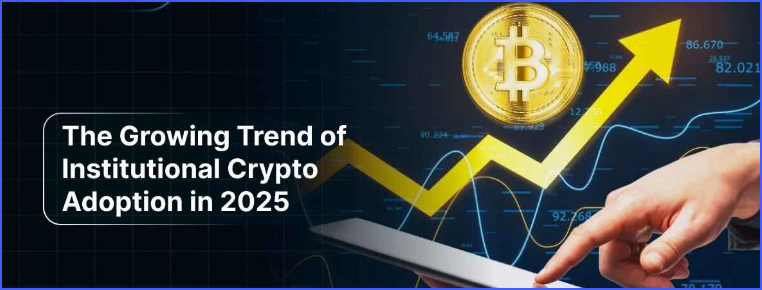
The approval of Bitcoin and Ethereum ETFs wasn’t just a price catalyst — it was a structural shift. Crypto is now embedded inside traditional financial systems:
Retirement accounts
Pension funds
Asset management portfolios
Corporate treasuries
Wealth management platforms
Over the next five years, this trend accelerates.
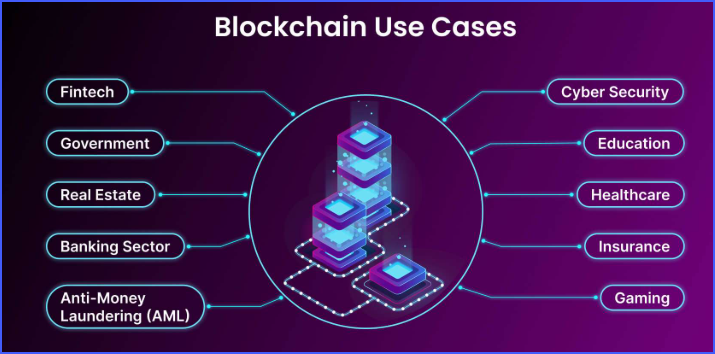
Institutions won’t just hold crypto — they’ll build products on top of it:
Tokenized funds
On-chain settlement systems
Crypto-based yield products
Blockchain-powered back-office infrastructure
This doesn’t mean crypto becomes “centralized,” but it does mean liquidity becomes deeper, volatility becomes more structured, and markets mature.
Crypto stops behaving like a casino — and starts behaving like a financial market.
2. Real-World Assets (RWAs) Move On-Chain at Scale
One of the most important but least understood developments in crypto is the rise of real-world asset tokenization.
Over the next five years, expect to see:
Treasury bills
Bonds
Real estate
Private credit
Commodities
…increasingly represented as tokens on blockchain networks.
Why?
Because blockchains allow assets to be:
Settled faster
Traded globally
Programmed with rules
Fractionalized
Audited transparently
Traditional finance is inefficient. DeFi rails are not.
As regulation clarifies and infrastructure improves, RWAs will likely become one of crypto’s largest sectors — not driven by retail speculation, but by institutional demand for efficiency.
This is one of the clearest signals that crypto is moving beyond pure speculation.
3. DeFi Becomes Safer, Simpler, and More Regulated
Early DeFi was powerful — but chaotic.
High yields, confusing interfaces, hacks, rug pulls, and complex mechanics scared off many users. Over the next five years, that changes.
Expect DeFi to evolve in three major ways:
1. Better UX
Wallets and protocols will feel more like traditional apps.
Users won’t need to understand gas, bridges, or smart contracts to participate.
2. More Risk Transparency
Audits, insurance, circuit breakers, and standardized risk disclosures will become normal — especially as institutional capital flows in.
3. Regulatory Guardrails
Not heavy-handed control — but clearer rules around disclosures, compliance, and custody.
The end result?
DeFi becomes usable by normal people, not just power users.
This is also why understanding DeFi fundamentals now matters so much — because as it becomes mainstream, the people who understand how it works will have a massive edge.
For a better understanding of DeFi check out my 9 module video course “DeFi Demystified” for only $97 USD.

4. AI and Crypto Quietly Converge
AI and crypto are often discussed separately, but their convergence is one of the most underestimated trends in tech.
Over the next five years, crypto will increasingly act as the trust layer for AI systems, enabling:
Data verification
Decentralized compute markets
Autonomous agent payments
Permissionless coordination
Transparent model incentives
AI needs:
Verifiable data
Neutral infrastructure
Automated payments
Blockchains provide all three.
This doesn’t mean every “AI coin” succeeds — most won’t.
But the integration of AI + blockchain will become invisible infrastructure powering tools people use every day.
Just like most people don’t think about TCP/IP when using the internet, future users won’t think about blockchains when using AI-powered apps.
5. Layer 2s Become the Real Home of Crypto Activity
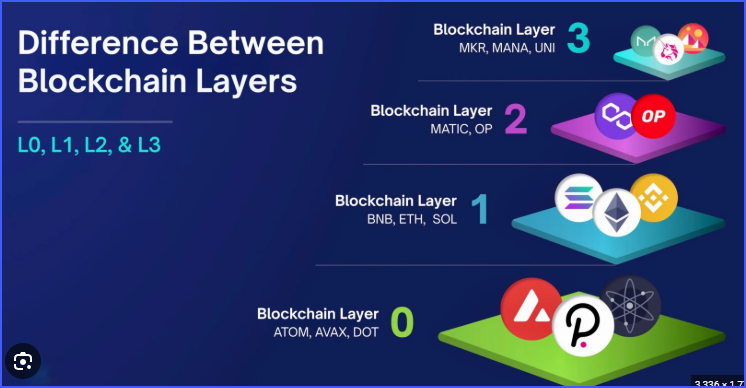
Ethereum won the smart contract war — but it won’t scale alone.
Over the next five years:
Layer 2 networks handle the majority of transactions
Fees drop dramatically
UX improves
App-specific chains flourish
Most users won’t know (or care) which chain they’re on.
They’ll care about:
Speed
Cost
Reliability
This shift allows crypto to scale to hundreds of millions of users without sacrificing decentralization at the base layer.
The future isn’t one chain to rule them all — it’s an ecosystem of interoperable networks.
6. The 4-Year Cycle Loses Its Power
Historically, crypto markets moved in clean four-year boom-bust cycles tied to Bitcoin halvings.
Over the next five years, that pattern weakens.
Why?
Because markets are now influenced by:
Macroeconomics
Interest rates
Institutional flows
ETF demand
Liquidity cycles
Halvings still matter — but they’re no longer the dominant force.
Crypto begins to behave more like:
A macro asset class
A technology sector
A financial infrastructure layer
This means fewer parabolic blow-offs — but more sustained opportunity for people who understand market structure and fundamentals.
7. Most People Will Use Crypto Without Realizing It
This may be the biggest shift of all.
In five years, many people will:
Send money
Earn yield
Own tokenized assets
Use blockchain-powered apps
…without ever saying, “I’m using crypto.”
Crypto becomes invisible infrastructure.
Just like most people don’t think about how the internet works — they just use it — blockchain fades into the background while powering the experience.
This is how true adoption happens.
👉So What This Means for You!
The next five years of crypto won’t be defined by hype alone.
They’ll be defined by:
Understanding
Skill
Adaptability
Fundamentals
The biggest opportunities won’t come from guessing the next meme coin — they’ll come from understanding how crypto fits into the broader financial system.
That’s especially true when it comes to DeFi.
As more assets move on-chain and more users enter the ecosystem, people who understand DeFi mechanics — yield, risk, protocols, and structure — will be far better positioned than those who don’t.
🎯 A Quick Note on Learning DeFi (Without the Overwhelm)
If you’ve ever felt like DeFi should make sense but doesn’t yet, you’re not alone.
That’s actually why I created DeFi Demystified — a 9-module video course designed to explain DeFi clearly, practically, and without unnecessary complexity.
It walks through:
What DeFi actually is
How yield works (and where risk hides)
How to navigate protocols safely
How DeFi fits into crypto’s future
No hype.
No jargon overload.
Just clarity.
You can learn more about it here if you’re curious: Click Here
Final Thoughts
Crypto’s future isn’t about replacing everything overnight.
It’s about integration.
Over the next five years, crypto becomes:
More mature
More useful
More regulated
More invisible
More powerful
The wild-west phase fades, and the infrastructure phase begins.
And the people who thrive won’t be the loudest — they’ll be the ones who took the time to understand how the system really works.
The future of crypto isn’t disappearing.
It’s quietly arriving.