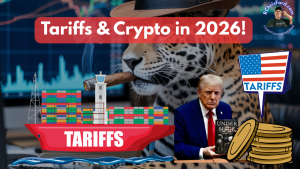
Tariffs in 2026: What They Are and How They Could Affect Crypto Prices

Are Tariffs a Problem for Crypto or do they Increase Upside Momentum?

Tariffs are suddenly back in the spotlight—and if you trade or invest in crypto, you might be wondering why a policy tool that targets physical goods can shake a digital asset market.

The simple answer: tariffs can change the macro environment (inflation, growth, interest rates, and risk appetite). And crypto—especially Bitcoin—has increasingly traded like a macro-sensitive asset during certain regimes.

In this article, you’ll learn:

  • What tariffs are (plain English)

  • Why they exist and how they work

  • The main channels through which tariffs can influence crypto prices in 2026

  • What to watch if you’re a trader (volatility triggers, not predictions)

What Are Tariffs?

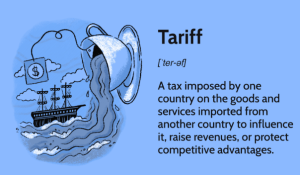
A tariff (also called a customs duty) is a tax a government charges on imported goods. It’s typically paid by the importer and often raises the price of imported products.

Governments use tariffs to:

  • Protect domestic industries

  • Raise revenue

  • Apply economic pressure in trade disputes or negotiations

Think of tariffs as a lever that can influence trade flows, pricing power, and business decisions—sometimes quickly.

When people say crypto has become institutionalized, they don’t just mean that big firms bought Bitcoin.

Institutionalization means:

  • Professional capital is involved

  • Risk management frameworks are applied

  • Regulatory clarity is improving

  • Infrastructure is mature enough to support scale

In other words, crypto is no longer treated like a side experiment — it’s being treated like a legitimate asset class.

That shift has deep implications for volatility, opportunity, and participation.
How Tariffs Work in the Real Economy

Even though tariffs are “just a tax,” their effects ripple outward because they change incentives:

  1. Imported goods become more expensive

  2. Companies either:

    • Pass costs to consumers (higher prices), or

    • Absorb costs (lower margins), or

    • Shift supply chains (time-consuming, costly)

  3. Trade volume and business investment can change

  4. Consumer sentiment and corporate confidence shift

In other words: tariffs can hit both prices and growth—and sometimes in different directions at different times.

Recent Fed research highlights this complexity: tariff impacts may differ in the short run vs long run, with effects not always moving in a single direction.
Meanwhile, St. Louis Fed analysis suggests tariff measures can exert measurable upward pressure on consumer prices in certain contexts.

So when traders ask, “Are tariffs inflationary or deflationary?” the most honest answer is: it depends on the time frame and the broader economic backdrop.

Why Crypto Cares About Tariffs in 2026

Crypto doesn’t directly import containers of steel or cars. But crypto reacts to what tariffs can change:

1) Inflation expectations

If tariffs push costs higher (or markets expect them to), inflation expectations can rise.
If the market believes tariffs will slow demand and growth, it might expect disinflation/deflation pressure instead.

Why that matters: inflation expectations influence interest rates and liquidity—two things crypto often responds to.

2) Interest rate expectations and liquidity

Central bank policy is a huge driver of risk assets. When rates are high or rising, speculative assets often struggle. When rates are falling (or expected to fall), liquidity conditions can improve and risk appetite can return.

Tariffs can affect those expectations because they can change the inflation/growth mix that central banks watch.

3) Risk sentiment (“risk-on / risk-off”)

Tariff escalations can increase uncertainty and push markets into “risk-off.” Crypto—especially altcoins—often gets hit harder when traders reduce risk.

4) The U.S. dollar and yields

Macro research often finds crypto returns can be sensitive to variables like exchange rates and yields, though relationships vary across time periods.
Tariff headlines can move currencies and bond markets, which can spill into crypto positioning.

1. Infrastructure Matured

By the mid-2020s, crypto infrastructure improved dramatically:

  • Institutional-grade custody solutions

  • Better on-ramps and off-ramps

  • Professional trading venues

  • Derivatives and hedging tools

Institutions don’t enter markets without infrastructure. Once it existed, the door opened.

2. Regulation Became Clearer (Not Perfect, But Clearer)

While regulation is still evolving, 2026 looks very different from the regulatory uncertainty of earlier years.

Clearer frameworks around:

  • Asset classification

  • Compliance

  • Reporting requirements

gave institutions the confidence to participate without existential legal risk.

Clarity doesn’t eliminate risk — but it makes risk manageable.

3. Crypto Proved It Wasn’t Going Away

After surviving multiple boom-and-bust cycles, crypto demonstrated resilience.

Each cycle:

  • Cleaned out excess speculation

  • Forced innovation

  • Strengthened long-term conviction

Institutions didn’t enter because crypto was exciting — they entered because it was durable.
The 4 Main Channels Tariffs Can Move Crypto Prices

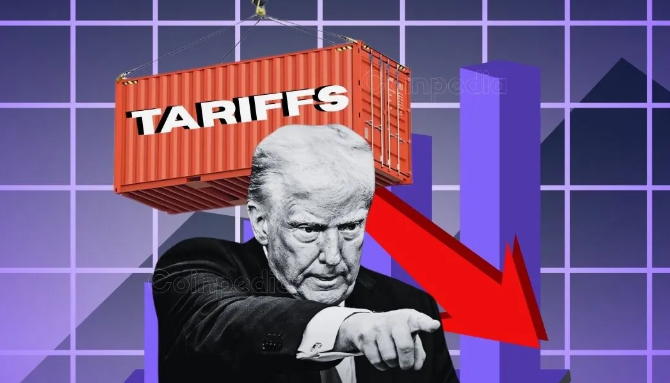
Let’s break it down into the practical pathways traders actually see on screens.

Channel A: Tariffs → Inflation narrative → Fed narrative → Crypto volatility

This is the “macro domino effect.”

  • Tariff headline hits

  • Market reprices inflation expectations

  • Bond yields and rate-cut/rate-hike probabilities shift

  • Crypto reacts—often fast because it trades 24/7

Even the narrative shift can cause volatility before the data changes.

Channel B: Tariffs → Growth fears → risk-off → crypto sells off (especially alts)

If tariffs are framed as harmful to global growth or trade volumes, markets can go risk-off:

  • equities weaken

  • volatility rises

  • crypto (especially higher-beta coins) can drop faster

In these environments, Bitcoin sometimes holds up better than smaller assets, but that’s not guaranteed.

Channel C: Tariffs → Supply chain stress → commodities/energy moves → inflation hedging debate

Tariffs can affect supply chains and input costs, influencing commodity pricing and inflation debates.
That can reignite the “Bitcoin as hedge” narrative—especially when confidence in fiat purchasing power becomes a talking point. (The “digital gold” thesis is debated, but it comes back during certain regimes.)

Channel D: Tariffs → Uncertainty → “policy premium” in markets → range-bound chop

Sometimes tariffs don’t cause an immediate trend—they cause compression.

Traders hesitate:

  • longs don’t want to chase into headline risk

  • shorts don’t want to press into support

  • price gets stuck in a range

This is when you often see:

  • lower spot volume

  • higher sensitivity to news

  • sudden breakout moves when a narrative resolves

So Will Tariffs Make Crypto More Volatile in 2026?

Potentially, yes—especially around:

  • major tariff announcements

  • court decisions or policy reversals

  • retaliatory measures from other countries

  • inflation and jobs prints that confirm or deny tariff narratives

But the “direction” isn’t automatic. Tariffs can create two-way volatility:

  • inflation concerns can push one narrative

  • growth fears can push the opposite narrative
    And crypto can whip between both.

That’s why tariff-driven markets often feel choppy: the market is constantly re-pricing what tariffs mean for inflation, growth, and policy.

What Traders Should Watch in 2026

If you want to translate this into action, watch the macro signals that tend to move crypto:

  1. Bond yields (often a proxy for rate expectations)

  2. USD strength (risk assets often react)

  3. Inflation expectations / CPI narrative

  4. Equity risk sentiment (risk-on vs risk-off)

  5. Crypto funding / leverage build-ups (volatility fuel)

  6. Key range levels (tariff headlines often break compressions)

Also, remember that crypto can front-run traditional markets because it trades continuously—so overnight headlines can hit crypto first.

Bottom Line

Tariffs are not “a crypto event.” They’re a macro event.

And in 2026, crypto reacts to macro because:

  • institutions and professional capital pay attention to macro regimes

  • liquidity and rate expectations matter

  • risk sentiment flows across markets

The most useful mindset is not: “Tariffs make crypto go up/down.”
It’s: “Tariffs can change the macro backdrop—and that can change volatility, liquidity, and positioning in crypto.”

Facebook
Twitter
LinkedIn
Pinterest
Crypto Training Simplified