
For many people, the idea of crypto trading sounds exhausting.
✅Endless charts.
✅Constant alerts.
✅Watching five-minute candles like your future depends on them.
If you have a full-time job, family responsibilities, or simply don’t want crypto to become your entire life, this style of trading feels unrealistic — and honestly, unnecessary.
Here’s the truth most people don’t hear enough:
🎯You do not need to watch charts all day to trade crypto effectively.
In fact, constantly staring at price action often leads to worse decisions, more stress, and unnecessary losses. The most consistent traders usually do the opposite — they simplify.
This article breaks down how to approach crypto trading in a way that fits into real life, reduces screen time, and focuses on structure instead of noise.
Many beginners assume more screen time equals better results.
In reality, excessive chart watching often leads to:
Overtrading
Emotional decision-making
Entering trades too late
Exiting too early
Chasing moves that already happened
When you stare at charts constantly, every small move feels important — even when it isn’t.
Markets don’t reward attention.
They reward patience, planning, and discipline.

One of the biggest mindset shifts successful traders make is understanding that trading is mostly waiting.
Good trading looks like:
Identifying high-probability areas
Planning entries and exits ahead of time
Waiting for price to come to you
Accepting that many days require no action
Bad trading looks like:
Clicking buttons out of boredom
Forcing trades because “something has to happen”
Reacting instead of planning
The market doesn’t pay you for effort.
It pays you for correct decisions.
If you don’t want to watch charts all day, the first adjustment is simple:
Stop trading lower timeframes.
Lower timeframes (1-minute, 5-minute charts) are noisy, emotional, and demanding. They require constant monitoring and lightning-fast decisions.
Higher timeframes (4-hour, daily, weekly) offer:
Cleaner structure
Fewer false signals
More time to think
Less emotional pressure
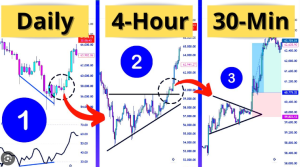
Most people with real lives should focus on swing trading, not day trading.
Swing trading allows you to:
Analyze once or twice a day
Set alerts instead of watching screens
Let trades develop over days or weeks
This alone eliminates 80% of unnecessary stress.
If you want to trade crypto without staring at charts, you must have a plan before entering a trade.
A basic trading plan answers three questions:
Where am I entering?
Where am I wrong? (Stop loss)
Where am I taking profit?
If you don’t know these answers before entering, you’re guessing — not trading.
A simple plan removes the need to constantly monitor price because:
Your risk is already defined
Your exit points are already chosen
Your emotions are removed from the process
Once a trade is planned, your job is mostly done.
Professional traders don’t watch charts all day — they use alerts.
Instead of staring at price:
Set alerts at key levels
Get notified when price reaches your zone
Re-evaluate only when necessary
Alerts allow you to:
Stay productive during the day
Avoid emotional reactions to small moves
Trade only when it matters
You’re no longer glued to a screen.
You’re simply responding to planned situations.
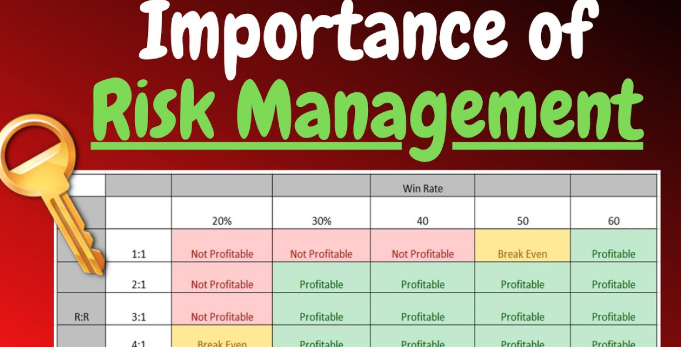
Another key to reducing screen time is trading less, not more.
Most traders lose money because they:
Take too many trades
Trade low-quality setups
Feel the need to always be “in something”
Consistency improves when you:
Trade fewer setups
Focus on higher probability situations
Accept that doing nothing is often the right move
One good trade per week can outperform ten emotional trades per day.
When risk is managed correctly, you don’t need to babysit trades.
Proper risk management means:
Risking a small, fixed percentage per trade
Never needing to “check” price constantly
Accepting losses calmly when they happen
If one trade can emotionally ruin your day, you’re risking too much.
Lower risk = clearer thinking = better decisions.
Social media makes trading look complex on purpose.
Indicators stacked on indicators.
Constant predictions.
“Urgent” trade calls every hour.
Complexity keeps people dependent.
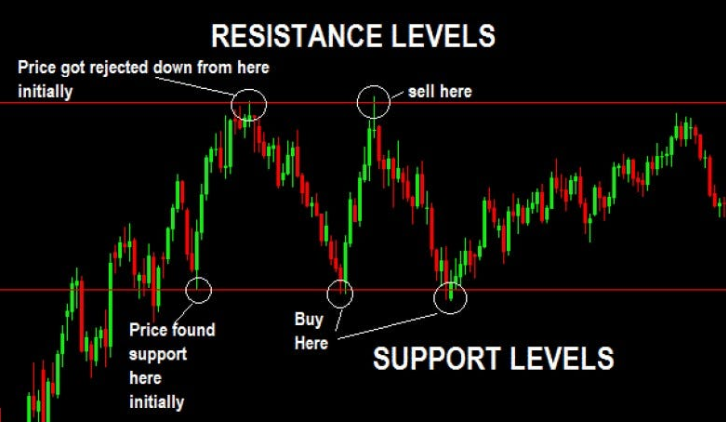
In reality, profitable trading often relies on:
Market structure
Support and resistance
Trend direction
Patience
Simple systems are easier to follow, easier to repeat, and easier to manage alongside a normal life.
If you’re serious about trading crypto without turning it into a second job, education matters — but it needs to be practical.
The goal isn’t:
To memorize every indicator
To catch every move
To trade all day
The goal is:
To understand structure
To manage risk
To trade calmly and consistently
That’s why I recommend Crypto Trading FREE 1 Day Trading Course — it focuses on clarity and structure, not hype or constant screen time.
👉 Check out FREE Crypto Trading 1 Day Course Here: earncryptoprofits.com
It’s designed for people who want to trade intelligently, not obsessively.
You don’t need to watch charts all day to trade crypto.
In fact, doing so usually leads to:
Worse decisions
More stress
Lower consistency
The most sustainable approach to crypto trading is:
Fewer trades
Higher timeframes
Clear plans
Strong risk management
Crypto trading should support your life — not consume it.
If you want a calmer, smarter approach, start with education, keep things simple, and let structure do the heavy lifting.