
Crypto trading doesn’t fail most people because the market is impossible.
It fails because most traders never follow a Blueprint. What is a ‘Blueprint’? A consistent repeatable pattern that produces profits.
They jump from strategy to strategy, chase hype, overtrade, and react emotionally to price movement. Over time, this leads to frustration, inconsistency, and losses — even in strong markets.
In 2026, the traders who last are not the loudest or the fastest. They are the ones who operate with simple, repeatable systems that prioritize discipline and risk management over prediction.
This article breaks down a simple crypto trading blueprint designed to help traders pursue consistent results, without staring at charts all day or relying on hype.
Before we talk about solutions, it’s important to understand the real problem.
Most traders struggle because they:
Trade without a plan
Use too many indicators
Chase entries late
Ignore risk management
Trade emotionally
The issue isn’t intelligence or effort. It’s lack of structure.
Without a framework, every trade becomes a guess. And when every trade is a guess, results are random.
Consistency comes from process, not prediction.


A trading blueprint is not a strategy that tells you when to buy or sell.
It’s a decision-making system that answers four core questions:
When should I trade?
What conditions must exist before I enter?
How much am I willing to risk?
When do I exit — win or lose?
If any of these questions are unclear, the trade is skipped.
This alone eliminates many bad trades.
A good blueprint should be:
Easy to follow
Repeatable
Emotion-resistant
Adaptable to different market conditions
Complex systems often fail because they break down under pressure. Simple systems survive because they are easier to execute consistently.

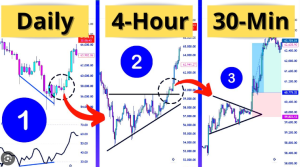
One of the biggest mistakes traders make is trading too small of a timeframe. In addition to the 5 minute timeframe, always check the 1 hour, 4 hour and daily charts as well.
Lower timeframes:
Create noise
Increase emotional reactions
Encourage overtrading
In 2026, many consistent traders focus on:
1-hour charts
4-hour charts
Daily charts
Higher timeframes:
Reduce false signals
Improve decision quality
Require less screen time
This is especially important for traders with jobs, families, or limited availability.
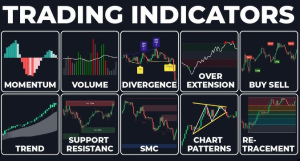
Indicators should support decisions — not replace them.
Before taking a trade, traders using a simple framework ask:
Is the market trending or ranging?
Is price making higher highs or lower lows?
Is momentum supportive or weakening?
This provides context.
Indicators without context lead to confusion. Structure provides direction.
More indicators do not mean better results.
Most consistent traders use:
One momentum indicator (like RSI)
Or one volatility indicator (like Bollinger Bands)
The goal is confirmation, not prediction.
A simple rule:
If indicators disagree, don’t trade.
No trade is better than a bad trade.
Professional traders think about risk first, not profit.
Before entering any trade, define:
Where the trade is invalidated
How much capital is at risk
Whether the reward justifies the risk
Many traders risk too much on one trade and then trade emotionally afterward.
A simple framework limits risk per trade to a small, predefined amount — allowing traders to survive losing streaks.
Consistency comes from staying in the game.
Exits should never be emotional.
A blueprint defines:
Profit targets
Stop losses
Conditions for partial exits
This prevents:
Holding winners too long
Cutting winners too early
Letting losses grow
Planning exits before entry removes emotion from the trade.
Overtrading is one of the fastest ways to lose consistency.
A simple framework encourages:
Fewer trades
Higher-quality setups
Regular review
Instead of asking:
“How many trades can I take today?”
Ask:
“Was this trade worth taking?”
Journaling and review are where real improvement happens.

Crypto markets have matured.
They now reward:
Patience
Discipline
Risk awareness
Process-driven decisions
The days of random wins from reckless behavior are fading.
Simple blueprints align with:
Institutional-style thinking
Professional risk management
Long-term sustainability
This doesn’t mean trading is easy — it means it’s clearer.
It’s important to be realistic.
This blueprint does not:
Guarantee profits
Eliminate losses
Predict market tops or bottoms
What it does is:
Reduce emotional trading
Improve decision quality
Create consistency over time
That’s the real edge.

Even the best blueprint fails without education.
Most traders struggle not because they lack tools, but because they lack:
Risk understanding
Market structure knowledge
Discipline
That’s why many traders begin with structured education before committing capital.
If you’re looking for a simple, beginner-friendly introduction to crypto trading, there’s a free 1-Day Trading Course that walks through:
Market basics
Risk management
Simple trading frameworks
Common mistakes to avoid
👉 Access the free 1-Day Crypto Trading Course here:
https://earncryptoprofits.com
No hype. Just education designed to build clarity and confidence.
Most consistent traders:
Stick to one blueprint
Trade fewer setups
Focus on execution quality
Review performance regularly
They don’t chase every move. They wait for their conditions.
That patience is what creates consistency.
Consistency in crypto trading doesn’t come from:
Better predictions
More indicators
Faster reactions
It comes from:
Structure
Risk management
Discipline
Repetition
A simple crypto trading blueprint removes noise and replaces chaos with clarity.
If you want better results, trade less, plan more, and follow a system you can execute under pressure.
That’s how consistent traders are built.