
For years, crypto was the Wild West — a chaotic playground dominated by retail traders, degen bets, overnight pumps, Twitter hype cycles, and early adopters who were learning as they went. The biggest risk back then? Not having the guts (or the sleep schedule) to jump into a token before it “mooned.”
But fast-forward to 2026, and the crypto landscape looks nothing like it did even just a few years ago.
The biggest investors in the space are no longer retail traders…
They’re institutions — and they’ve quietly become the most influential force in the entire crypto market.
This isn’t speculation.
This isn’t a conspiracy.
This is happening right now — publicly, structurally, and economically.
And if you’re a trader, your ability to adapt to this shift will determine whether you thrive in this market…
…or get steamrolled by it.
Let’s break down how this happened, what it means, and how you can stay ahead of the new institutional era of crypto.
1. The Wall Street Invasion Began With Bitcoin ETFs
When Bitcoin ETFs were approved in 2024, the narrative was all about “accessibility”:
“Now anyone can buy Bitcoin through their broker!”
That was true — but it wasn’t the real story.
The real story was this:
ETFs gave massive institutions a compliant, regulated, Wall-Street-friendly way to buy, hold, and profit from Bitcoin — at scale.
Today:
BlackRock
Fidelity
VanEck
Franklin Templeton
Invesco
WisdomTree
…all hold enormous Bitcoin positions through their ETF products.
These firms now control more BTC than many major crypto exchanges combined.
And with that control comes what?
Influence. Liquidity. Power. Market shaping ability.
Bitcoin stopped being “the people’s money” the moment multi-trillion-dollar entities realized it was too profitable to ignore.
But the takeover didn’t stop there.

2. Once Institutions Enter a Market, They Don’t Leave — They Expand
Institutions don’t step into a new asset class just to experiment.
They step in to establish dominance.
After spot Bitcoin ETFs succeeded, the next domino fell:
Ethereum ETFs, staking products, on-chain credit markets, tokenized treasuries, and real-world asset platforms.
Institutional demand flooded into:
ETH yield products
Liquid staking derivatives
Tokenized T-bill platforms (like Ondo and Backed)
On-chain lending markets
Institutional-grade custody
The $8B+ tokenized treasury market alone is proof that institutions are no longer “testing crypto” — they’re integrating it into their financial systems.
The moment banks realized:
“We can tokenize debt, automate settlement, earn yield, and reduce middlemen…”
It was game over.
Crypto wasn’t a niche anymore.
It became part of global finance.
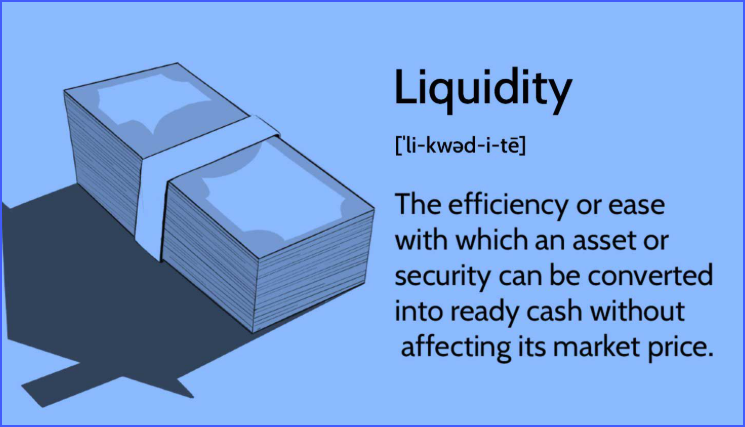
3. Liquidity Dynamics Have Completely Changed
Before institutions entered:
Liquidity was thin
Market movements were unpredictable
Pumps were often retail-driven
Liquidity rotated rapidly between narratives
Now?
The market behaves more like a hybrid of traditional finance + crypto volatility.
Here’s what institutional liquidity brings:
**✔ Bigger buy walls
✔ Deeper order books
✔ Fewer random flash crashes
✔ Higher trading volume
✔ More predictable liquidity cycles**
But there’s a trade-off…
When the big money decides to reposition, accumulate, distribute, or hedge — the entire market feels it instantly.
And this leads to a harsh truth:
Retail traders can no longer move markets.
Retail traders now react to markets institutions influence.
If you’re still trading like it’s 2021…
if you’re still waiting for “ape season”…
if you’re still chasing influencer pumps…
You’re trading the wrong market.
4. Institutional Crypto Doesn’t Behave Like Retail Crypto
Retail-driven crypto (2017–2021) was fueled by:
Hype
Herd behavior
Social media cycles
Low liquidity
Irrational exuberance
The new institutional-era crypto is driven by:
Derivatives
Volatility harvesting
Structured products
Hedging
Liquidity engineering
Macro cycles
Regulatory clarity
This shift fundamentally changes the game for traders.
Institutions need volatility, but they also shape volatility.
This means:
**The market is more orderly, but harder for emotional traders.
Narratives move slower, but last longer.
Momentum exists, but requires skill to catch.**
If you’re not using institutional thinking — liquidity zones, risk models, narrative rotation, macro structure — you’re playing chess while the big players are playing 4D chess.
5. Retail Still Wins — But Only When They Adapt
Here’s the good news:
Institutional presence doesn’t kill opportunity.
It amplifies it — for traders who know what they’re doing.
Institutions don’t eliminate volatility…
They create cleaner volatility.
They don’t eliminate narratives…
They create longer, more profitable ones.
They don’t eliminate opportunities…
They create new ones, especially in:
Pre-institutional altcoins
Early narratives
L2 ecosystems
AI + crypto
RWAs
Modular chains
But retail traders who rely on luck will get wiped out.
Those who rely on skill will thrive like never before.
And this brings us to something important…

⭐ If You Want to Trade in an Institutional Market… You Need Institutional-Level Skills
This new market doesn’t reward gamblers.
It rewards traders who understand:
Liquidity
Narrative momentum
Trend shifts
Smart risk management
High-probability setups
Volatility cycles
Market structure
And that’s exactly why I created my FREE Crypto Trading Bootcamp.
Not a course.
Not a paid upsell.
Not a guru promise.
A free, practical bootcamp built to help retail traders level up to the institutional standard — so you don’t get left behind in this new era.
🎯 Inside the Free Trading Bootcamp, You’ll Learn:
✔ How institutional liquidity actually moves crypto
✔ The safest way to find high-probability trades
✔ How to read momentum before the crowd catches on
✔ How to avoid the FOMO traps that institutions exploit
✔ A trading system that works in any market condition
✔ How to position yourself ahead of narratives — not behind them
This market is more competitive than ever…
…but also more profitable than ever if you have the right approach.
👉 Click here to join the free Trading Bootcamp
Spaces fill fast, and I only open it in limited rounds.
6. The Bottom Line: Crypto Isn’t Retail vs. Institutions — It’s Skilled Traders vs. Everyone Else
Institutions didn’t “take over” crypto.
They professionalized it.
And in the long run, that’s a good thing:
More liquidity
More stability
Fewer rug pulls
Better infrastructure
More predictable cycles
Higher long-term adoption
But only traders who evolve will thrive.
Those who don’t will feel like the game is rigged — when in reality, the rules simply changed.
The retail trader of 2026 must think differently.
And if you’re ready to shift from emotional trading to strategic trading…
👉 Grab your spot in the Free Crypto Trading Bootcamp here.
(It’s the fastest way to upgrade your skills and trade with confidence in the institutional era.
Final Thoughts
Crypto will never be what it was in 2017 or 2021 again — and that’s a good thing.
Institutions aren’t here to ruin crypto.
They’re here because crypto has matured into a real financial ecosystem.
And now that they’re here, they’re not leaving.
You can fight the new reality…
Or you can master it — and thrive in one of the greatest financial markets ever created.
Your move.